Tue, Aug 18, 2026
| فارسی
Volume 31, Issue 1 (Continuously Updated 2025)
IJPCP 2025, 31(1): 0-0 |
Back to browse issues page




Download citation:
BibTeX | RIS | EndNote | Medlars | ProCite | Reference Manager | RefWorks
Send citation to:


BibTeX | RIS | EndNote | Medlars | ProCite | Reference Manager | RefWorks
Send citation to:
Safarzade S, Joukar Kamalabadi M, Hoseini F, Golestaneh S M. The Reasons for Iranian Clients’ Premature Dropout of Psychotherapy and Counseling from the Therapists’ Point of View. IJPCP 2025; 31 (1)
URL: http://ijpcp.iums.ac.ir/article-1-4331-en.html
URL: http://ijpcp.iums.ac.ir/article-1-4331-en.html


1- Department of Psychology, Faculty of Literature and Humanities, Persian Gulf University, Bushehr, Iran.
2- Department of Psychology, Faculty of Literature and Humanities, Persian Gulf University, Bushehr, Iran. ,Joukar.m@gmail.com
2- Department of Psychology, Faculty of Literature and Humanities, Persian Gulf University, Bushehr, Iran. ,
Full-Text [PDF 15379 kb]
(904 Downloads)
| Abstract (HTML) (1307 Views)
Full-Text: (1100 Views)
Introduction
Many studies have shown that psychotherapy is effective in the treatment of mental disorders. However, the prevalence of premature dropout from psychotherapy and counseling is very high. Clients and therapists are expected to agree on the time to end psychotherapy, but most of the clients leave the sessions without coordinating with the therapist. This action occurs for many reasons. Clients who leave sessions early receive fewer benefits compared to other clients. Therapists whose clients leave sessions early feel inadequate. The reasons for the presence or non-attendance of clients in sessions may vary from person to person and from moment to moment. Psychotherapy approaches vary, each with its own specific method and duration. Therefore, it is difficult to have a uniform definition of the premature dropout from psychotherapy and counseling. Our knowledge of the possible predictors of this phenomenon is incomplete, and the predictive patterns of this phenomenon, especially for the variables that are related to the patient, are poorly understood. The therapist is also a fundamental element in the treatment process. A study showed that the therapist’s impact on the results of psychotherapy for clients is higher than the impact of treatment methods. Most of the studies in the field of premature dropout from psychotherapy and counseling have been done using quantitative methods. This method of analysis results in the loss of unique information and data, focusing solely on a few limited variables for predicting premature dropout. Therefore, as recommended by Barrett et al. [7], it is better to use qualitative studies for a comprehensive investigation of the effective factors in premature dropout. Therefore, in the current research, we aim to investigate the reasons for Iranian clients’ premature dropout of psychotherapy and counseling from the therapists’ point of view.
Methods
This is a qualitative study based on Strauss and Corbin’s grounded theory. The main tool for data collection was semi-structured interviews. The interview questions were formulated by studying the theoretical and experimental background of the research or by consulting with active experts in the field of the phenomenon. The data collection was carried out from September 2023 to July 2024. On average, each interview lasted 60-80 minutes. The interview questions were aimed at investigating the effective factors in the premature dropout of psychotherapy and counseling by clients. The participants were male and female counselors and therapists active in the field of mental health in Bushehr city, south of Iran, who have the necessary experience and a comprehensive understanding of the phenomenon under investigation. They were selected using a purposive sampling method. The sampling continued until reaching theoretical data saturation, which was achieved after interviewing 25 participants. To further ensure the saturation of data, six more interviews were also conducted. Therefore, the final sample size was 31. The inclusion criteria were at least 25 years of age, at least a master’s degree in counseling or psychology, and at least ten years of active work experience in counseling and psychotherapy centers. The exit criteria were short answers to the questions, incomplete answers, and not reviewing the recorded interviews and the extracted data to confirm their accuracy and relevance. The coding process was carried out in an inductive way according to the problem and the research objectives. In the inductive content analysis method, the researcher avoids using pre-determined categories and tries to derive the categories and their names from within the research data. After extracting all the primary concepts, the data obtained from open coding were compared with each other, and similar codes were placed in a category. Finally, similar subcategories were merged into one category, and the main category was formed. Lincoln and Guba’s four criteria of credibility, transferability, dependability, and confirmability were used to assess the trustworthiness of the data. MAXQDA software, version 2020 was used to analyze the data.
Results
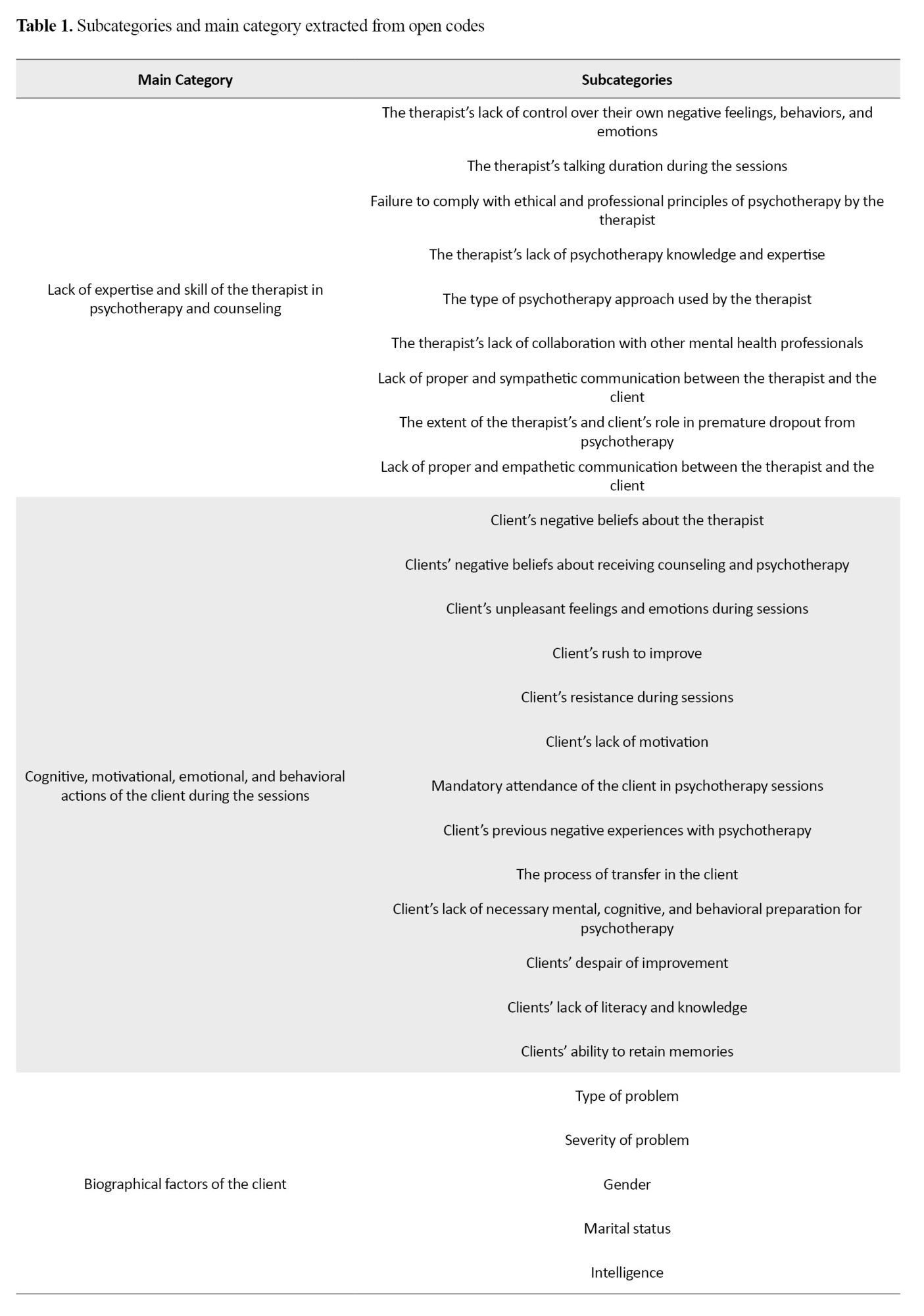
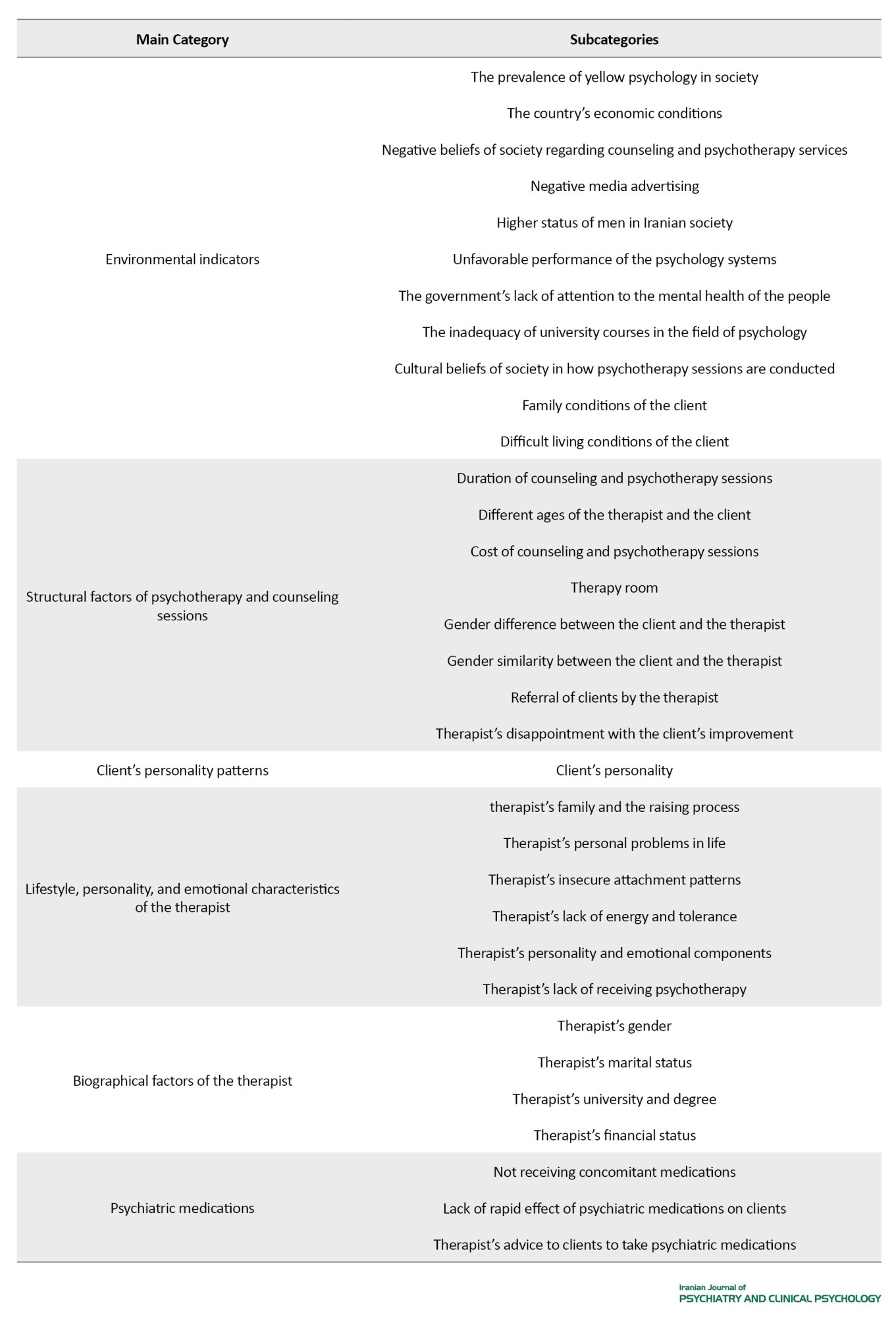
Seventeen female therapists (54.84%) and 14 male therapists (45.16%) participated in the study. Their age range was 35-62 years. Their work experience in the field of psychotherapy and counseling ranged from 10 to 35 years. Nine main categories were obtained from the in-depth interviews with therapists. Table 1 reports the main category and subcategories extracted from 439 open codes.
Conclusion
In this study, we identified nine main categories as the reasons for clients’ premature dropout from psychotherapy and counseling from the therapists’ point of view, which included: 1) Lack of expertise and skill of the therapist in psychotherapy and counseling, 2) Cognitive, motivational, emotional, and behavioral actions of the client during the sessions, 3) Biographical factors of the client, 4) Environmental indicators, 5) Structural factors of psychotherapy and counseling sessions, 6) Client’s personality patterns, 7) Lifestyle, personality, and emotional characteristics of the therapist, 8) Biographical factors of the therapist, and 9) Psychiatric medications. Developing more effective interventions to reduce clients’ premature dropout from psychotherapy and counseling requires a proper understanding and perception of these factors by mental health professionals.
Ethical Considerations
Compliance with ethical guidelines
This research was approved by the Ethics Committee of Bushehr University of Medical Sciences (Code: IR.BPUMS.REC.1403.087). All ethical principles, such as voluntary participation, informed consent, anonymity, and confidentiality, were observed.
Funding
This article was extracted from the dissertation of Somayeh Safarzade at the Faculty of Literature and Humanities, Persian Gulf University, Bushehr, Iran. This research did not receive any specific grant from funding agencies in the public, commercial or not-for-profit sectors.
Authors contributions
Conceptualization, Design, methodology, investigation, project administration, data curation, formal analysis, data interpretation, supervision, and writing: Somayeh Safarzade; conceptualization, design, methodology, investigation, data curation, formal analysis, data interpretation, and supervision: Mahnaz Joukar Kamalabadi; investigation, data interpretation, and supervision: Faridehsadat Hoseini; methodology, data interpretation and supervision: Seyed Mousa Golestaneh.
Conflicts of interest
The authors declare no conflict of interest.
Acknowledgments
The authors would like to thank the psychology and psychiatry clinics and the therapists for their cooperation in this study.
Many studies have shown that psychotherapy is effective in the treatment of mental disorders. However, the prevalence of premature dropout from psychotherapy and counseling is very high. Clients and therapists are expected to agree on the time to end psychotherapy, but most of the clients leave the sessions without coordinating with the therapist. This action occurs for many reasons. Clients who leave sessions early receive fewer benefits compared to other clients. Therapists whose clients leave sessions early feel inadequate. The reasons for the presence or non-attendance of clients in sessions may vary from person to person and from moment to moment. Psychotherapy approaches vary, each with its own specific method and duration. Therefore, it is difficult to have a uniform definition of the premature dropout from psychotherapy and counseling. Our knowledge of the possible predictors of this phenomenon is incomplete, and the predictive patterns of this phenomenon, especially for the variables that are related to the patient, are poorly understood. The therapist is also a fundamental element in the treatment process. A study showed that the therapist’s impact on the results of psychotherapy for clients is higher than the impact of treatment methods. Most of the studies in the field of premature dropout from psychotherapy and counseling have been done using quantitative methods. This method of analysis results in the loss of unique information and data, focusing solely on a few limited variables for predicting premature dropout. Therefore, as recommended by Barrett et al. [7], it is better to use qualitative studies for a comprehensive investigation of the effective factors in premature dropout. Therefore, in the current research, we aim to investigate the reasons for Iranian clients’ premature dropout of psychotherapy and counseling from the therapists’ point of view.
Methods
This is a qualitative study based on Strauss and Corbin’s grounded theory. The main tool for data collection was semi-structured interviews. The interview questions were formulated by studying the theoretical and experimental background of the research or by consulting with active experts in the field of the phenomenon. The data collection was carried out from September 2023 to July 2024. On average, each interview lasted 60-80 minutes. The interview questions were aimed at investigating the effective factors in the premature dropout of psychotherapy and counseling by clients. The participants were male and female counselors and therapists active in the field of mental health in Bushehr city, south of Iran, who have the necessary experience and a comprehensive understanding of the phenomenon under investigation. They were selected using a purposive sampling method. The sampling continued until reaching theoretical data saturation, which was achieved after interviewing 25 participants. To further ensure the saturation of data, six more interviews were also conducted. Therefore, the final sample size was 31. The inclusion criteria were at least 25 years of age, at least a master’s degree in counseling or psychology, and at least ten years of active work experience in counseling and psychotherapy centers. The exit criteria were short answers to the questions, incomplete answers, and not reviewing the recorded interviews and the extracted data to confirm their accuracy and relevance. The coding process was carried out in an inductive way according to the problem and the research objectives. In the inductive content analysis method, the researcher avoids using pre-determined categories and tries to derive the categories and their names from within the research data. After extracting all the primary concepts, the data obtained from open coding were compared with each other, and similar codes were placed in a category. Finally, similar subcategories were merged into one category, and the main category was formed. Lincoln and Guba’s four criteria of credibility, transferability, dependability, and confirmability were used to assess the trustworthiness of the data. MAXQDA software, version 2020 was used to analyze the data.
Results
Seventeen female therapists (54.84%) and 14 male therapists (45.16%) participated in the study. Their age range was 35-62 years. Their work experience in the field of psychotherapy and counseling ranged from 10 to 35 years. Nine main categories were obtained from the in-depth interviews with therapists. Table 1 reports the main category and subcategories extracted from 439 open codes.
Conclusion
In this study, we identified nine main categories as the reasons for clients’ premature dropout from psychotherapy and counseling from the therapists’ point of view, which included: 1) Lack of expertise and skill of the therapist in psychotherapy and counseling, 2) Cognitive, motivational, emotional, and behavioral actions of the client during the sessions, 3) Biographical factors of the client, 4) Environmental indicators, 5) Structural factors of psychotherapy and counseling sessions, 6) Client’s personality patterns, 7) Lifestyle, personality, and emotional characteristics of the therapist, 8) Biographical factors of the therapist, and 9) Psychiatric medications. Developing more effective interventions to reduce clients’ premature dropout from psychotherapy and counseling requires a proper understanding and perception of these factors by mental health professionals.
Ethical Considerations
Compliance with ethical guidelines
This research was approved by the Ethics Committee of Bushehr University of Medical Sciences (Code: IR.BPUMS.REC.1403.087). All ethical principles, such as voluntary participation, informed consent, anonymity, and confidentiality, were observed.
Funding
This article was extracted from the dissertation of Somayeh Safarzade at the Faculty of Literature and Humanities, Persian Gulf University, Bushehr, Iran. This research did not receive any specific grant from funding agencies in the public, commercial or not-for-profit sectors.
Authors contributions
Conceptualization, Design, methodology, investigation, project administration, data curation, formal analysis, data interpretation, supervision, and writing: Somayeh Safarzade; conceptualization, design, methodology, investigation, data curation, formal analysis, data interpretation, and supervision: Mahnaz Joukar Kamalabadi; investigation, data interpretation, and supervision: Faridehsadat Hoseini; methodology, data interpretation and supervision: Seyed Mousa Golestaneh.
Conflicts of interest
The authors declare no conflict of interest.
Acknowledgments
The authors would like to thank the psychology and psychiatry clinics and the therapists for their cooperation in this study.
References
- Ibebunjo E. Examining therapist experience with resistant clients. [PhD dissertation]. Chicago: National Louis University; 2021. [Link]
- Finlay M. The relationship between psychotherapist personality and therapeutic alliance [PhD dissertation]. California: Loma Linda University; 2018. [Link]
- Swift JK, Greenberg RP. Premature discontinuation in adult psychotherapy: A meta-analysis. Journal of Consulting and Clinical Psychology. 2012; 80(4):547-59. [DOI:10.1037/a0028226] [PMID]
- Jung SI, Serralta FB, Nunes ML, Eizirik CL. Beginning and end of treatment of patients who dropped out of psychoanalytic psychotherapy. Trends in Psychiatry and Psychotherapy. 2013; 35(3):181-90. [DOI:10.1590/S2237-60892013000300005] [PMID]
- Hatchett GT, Park HL. Revisiting relationships between sex-related variables and continuation in counseling. Psychological Reports. 2004; 94(2):381-6. [DOI:10.2466/pr0.94.2.381-386] [PMID]
- Behl K, & Rajagopal M. Reasons for dropout of clients from therapy. International Journal of Indian Psychology. 2018; 6(2):135-50. [DOI:10.25215/0602.014]
- Barrett MS, Chua WJ, Crits-Christoph P, Gibbons MB, Casiano D, Thompson D. Early withdrawal from mental health treatment: Implications for psychotherapy practice. Psychotherapy: Theory, Research, Practice, Training. 2008; 45(2):247-67. [DOI:10.1037/0033-3204.45.2.247] [PMID]
- Todd DM, Deane FP, Bragdon RA. Client and therapist reasons for termination: A conceptualization and preliminary validation. Journal of Clinical Psychology. 2003; 59(1):133-47. [DOI:10.1002/jclp.10123] [PMID]
- Hatchett GT, Han K, Cooker PG. Predicting premature termination from counseling using the Butcher Treatment Planning Inventory. Assessment. 2002; 9(2):156-63. [DOI:10.1177/10791102009002006] [PMID]
- Seligman M. The effectiveness of psychotherapy: The consumer reports study. American Psychologist. 1995;50(12):965-74.[DOI:10.1037//0003-066X.50.12.965] [PMID]
- Duehn WD, Proctor EK. Initial clinical interaction and premature discontinuance in treatment. American Journal of Ortopsychiatry. 1977; 47(2):284-90. [DOI:10.1111/j.1939-0025.1977.tb00983.x] [PMID]
- Philips B, Wennberg P, Werbart A. Ideas of cure as a predictor of premature termination, early alliance and outcome in psychoanalytic psychotherapy. Psychology and Psychotherapy, Theory, Research, and Practice. 2007; 80(Pt 2):229-45.[DOI:10.1348/147608306X128266] [PMID]
- Prochaska J, DiClemente C. Transtheoretical therapy: Toward a more integrative model of change. Psychotherapy: Theory, Research, and Practice. 1982; 19(3):276-88. [DOI:10.1037/h0088437]
- Andersen RM. Revisiting the behavioral model and access to medical care: does it matter? Journal of Health and Social Behavior. 1995; 36(1):1-10. [DOI:10.2307/2137284] [PMID]
- Paul GL. Strategy of outcome research in psychotherapy. Journal of Consulting Psychology. 1967; 31(2):109-18. [DOI:10.1037/h0024436] [PMID]
- Hill CE, Corbett M. A perspective on the history of process and outcome research in counseling psychology. Journal of Counseling Psychology. 1993; 40(1):3-24. [DOI:10.1037/0022-0167.40.1.3]
- Walker RN. Therapeutic factors and premature termination in a university- based counseling training clinic [PhD dissertation]. Georgia: University of Georgia; 2012. [Link]
- Aponte HJ. The Soul of Therapy: The therapist's use of self in the therapeutic relationship. Contemporary Family Therapy. 2022; 44(2):136-43. [Link]
- Aponte HJ, Nelson G. I matter, too. Journal of Family Psychotherapy. 2018; 29(1):31-42. [DOI:10.1080/08975353.2018.1416232]
- Swift JK, Tompkins KA, Parkin SR. Understanding the client's perspective of helpful and hindering events in psychotherapy sessions: A micro-process approach. Journal of Clinical Psychology. 2017; 73(11):1543-55. [DOI:10.1002/jclp.22531] [PMID]
- Blow AJ, Sprenkle DH, Davis SD. Is who delivers the treatment more important than the treatment itself? The role of the therapist in common factors. Journal of Marital and Family Therapy. 2007; 33(3):298-317. [DOI:10.1111/j.1752-0606.2007.00029.x] [PMID]
- Leonhardt BL, Kukla M, Belanger E, Chaudoin-Patzoldt KA, Buck KD, Minor KS, et al. Emergence of psychotic content in psychotherapy: An exploratory qualitative analysis of content, process, and therapist variables in a single case study. Psychotherapy Research . 2018; 28(2):264-80. [DOI:10.1080/10503307.2016.1219421] [PMID]
- Anderson KN. Premature termination of outpatient psychotherapy: predictors, reasons, and outcomes [PhD dissertation]. Nebraska: University of Nebraska-Lincoln; 2015. [Link]
- Corbin J, Strauss A. Basics of Qualitative Research: Techniques and Procedures for Developing Grounded Theory. Thousand Oaks. CA: Sage Publications:Inc; 2008. [Link]
- Piselli A, Halgin RP, Macewan GH. What went wrong? Therapists' reflections on their role in premature termination. Psychotherapy Research. 2011; 21(4):400-15. [DOI:10.1080/10503307.2011.573819] [PMID]
- Kheirkhah Alavi S M, Bahmani B, Abdi K. [Identifying the psychological factors postponing the marriage in Iranian women: A qualitative study (Persian)]. Iranian Journal of Psychiatry and Clinical Psychology. 2024; 30(1):5031-1 [DOI:10.32598/ijpcp.30.5031.1]
- Lilliengen P, Werbart A. Therapists' view of therapeutic action in psychoanalytic psychotherapy with young adults. Psychotherapy (Chicago, Ill). 2010; 47(4):570-85. [DOI:10.1037/a0021179] [PMID]
- Windle E, Tee H, Sabitova A, Jovanovic N, Priebe S, Carr C. Association of patient treatment preference with dropout and clinical outcomes in adult psychosocial mental health interventions: A systematic review and meta-analysis. JAMA Psychiatry. 2020; 77(3):294-302. [DOI:10.1001/jamapsychiatry.2019.3750] [PMID]
- Knekt P, Grandell L, Sares-Jäske L, Lindfors O. Poor suitability for psychotherapy - a risk factor for treatment non-attendance?. Journal of Affective Disorders. 2021; 295:1432-9. [DOI:10.1016/j.jad.2021.09.020] [PMID]
- Baekeland F, Lundwall L. Dropping out of treatment: A critical review. Psychological Bulletin. 1975; 82(5):738-83. [DOI:10.1037/h0077132] [PMID]
- Fletcher A. Understanding the influence of patients' and therapists' personality on psychotherapy treatment outcomes [DClinPsy thesis]. Sheffield: University of Sheffield; 2021. [Link]
- Wierzbicki M, Pekarik G. A meta-analysis of psychotherapy dropout. Professional Psychology - Research & Practice. 1993; 24(2):190-5. [Link]
- Abd Elbaky GB, Hay PJ, le Grange D, Lacey H, Crosby RD, Touyz S. Pre-treatment predictors of attrition in a randomised controlled trial of psychological therapy for severe and enduring anorexia nervosa. BMC Psychiatry. 2014; 14:69. [DOI:10.1186/1471-244X-14-69] [PMID]
- Edlund MJ, Wang PS, Berglund PA, Katz SJ, Lin E, Kessler RC. Dropping out of mental health treatment: Patterns and predictors among epidemiological survey respondents in the United States and Ontario. The American Journal of Psychiatry. 2002; 159(5):845-51. [DOI:10.1176/appi.ajp.159.5.845] [PMID]
- Romans JS, White JK, Harrist RS, Boswell DL, Sims WD, Murn LT. Predicting attrition from counseling in a university counseling center sample using the Outcome Questionnaire-45.2. The Internet Journal of Mental Health. 2009; 7(1):1-8. [Link]
- Harpaz-Rotem I, Rosenheck RA. Serving those who served: Retention of newly returning veterans from Iraq and Afghanistan in mental health treatment. Psychiatric Services. 2011; 62(1):22-7.[DOI:10.1176/ps.62.1.pss6201_0022] [PMID]
- White KS, Allen LB, Barlow DH, Gorman JM, Shear MK, Woods SW. Attrition in a multicenter clinical trial for panic disorder. The Journal of Nervous and Mental Disease. 2010; 198(9):665-71. [DOI:10.1097/NMD.0b013e3181ef3627] [PMID]
- Khazaie H, Rezaie L, Shahdipour N, Weaver P. Exploration of the reasons for dropping out of psychotherapy: A qualitative study. Evaluation and Program Planning. 2016; 56:23-30. [DOI:10.1016/j.evalprogplan.2016.03.002]] [PMID]
- Goddard E, Wingrove J, Moran P. The impact of comorbid personality difficulties on response to IAPT treatment for depression and anxiety. Behaviour Research and Therapy. 2015; 73:1-7. [DOI:10.1016/j.brat.2015.07.006] [PMID]
- Lambert MJ, Barley DE. Research summary on the therapeutic relationship and psychotherapy outcome. Psychotherapy: Theory, Research, Practice, Training. 2001; 38(4):357-61. [Link]
- Hanevik E, Røvik FMG, Bøe T, Knapstad M, Smith ORF. Client predictors of therapy dropout in a primary care setting: A prospective cohort study. BMC Psychiatry. 2023; 23(1):358.[DOI:10.1186/s12888-023-04878-7] [PMID]
- Cvetković A. The concept of culture in the context of psychotherapy [MA thesis]. Jyväskylä: University of Jyväskylä; 2020. [Link]
- Cottone JG, Drucker P, Javier RA. Gender differences in psychotherapy dyads: Changes in psychological symptoms and responsiveness to treatment during 3 months of therapy. Psythotherapy: Theory, Research, Practice, Training. 2002; 39(4):297-308. [Link]
- Kang SY, Youn N, Yoon HC. The self-regulatory power of environmental lighting: The effect of illuminance and correlated color temperature. Journal of Environmental Psychology. 2019; 62:30-41. [DOI:10.1016/j.jenvp.2019.02.006]
- Ylagan V. The role of interior design in the psychotherapist's office [Senior Theses]. Columbia: University of South Carolina - Columbia; 2021. [Link]
- Mohl PC, Martinez D, Ticknor C, Huang M, Cordell L. Early dropouts from psychotherapy. The Journal of Nervous and Mental Disease. 1991; 179(8):478-81. [DOI:10.1097/00005053-199108000-00005] [PMID]
- Falkenström F, Granström F, Holmqvist R. Therapeutic alliance predicts symptomatic improvement session by session. Journal of Counseling Psychology. 2013; 60(3):317-28. [DOI:10.1037/a0032258] [PMID]
- Piper WE, Ogrodniczuk JS, Joyce AS, McCallum M, Rosie JS, O'Kelly JG, et al. Prediction of dropping out in time-limited, interpretive individual psychotherapy. Psychotherapy: Theory, Research, Practice, Training. 1999; 36(2):114-22. [Link]
- Stefana A, Bulgari V, Youngstrom EA, Dakanalis A, Bordin C, Hopwood CJ. Patient personality and psychotherapist reactions in individual psychotherapy setting: A systematic review. Clinical Psychology & Psychotherapy. 2020; 27(5):697-713. [DOI:10.1002/cpp.2455] [PMID]
- Yakeley J, Hale R, Johnston J, Kirtchuk G, Shoenberg P. Psychiatry, subjectivity and emotion - deepening the medical model. Psychiatric Bulletin. 2014; 38(3):97-101. [DOI:10.1192/pb.bp.113.045260] [PMID]
- Levy SR, Hilsenroth MJ, Conway F, Owen J. Patient personality characteristics and therapeutic integration: treating borderline personality and emotionally dysregulated-dysphoric personality features. Research in Psychotherapy (Milano). 2022; 25(2):611. [DOI:10.4081/ripppo.2022.611] [PMID]
- Ryum T, Vogel PA, Walderhaug EP, Stiles TC. The role of self-image as a predictor of psychotherapy outcome. Scandinavian Journal of Psychology. 2015; 56(1):62-8. [DOI:10.1111/sjop.12167] [PMID]
- Clarkin JF, Levy KN. The influence of client variables on psychotherapy. In: Lambert's MJ, editor. Bergin and garfield's handbook of psychotherapy and behavior change. New York: Wiley; 2003. [Link]
- Johns RG, Barkham M, Kellett S, Saxon D. A systematic review of therapist effects: A critical narrative update and refinement to review. Clinical Psychology Review. 2019; 67:78-93. [DOI:10.1016/j.cpr.2018.08.004] [PMID]
- Antonuccio DO, Lewinsohn PM, Steinmetz JL. Identification of therapist differences in a group treatment for depression. Journal of Consulting and Clinical Psychology. 1982; 50(3):433-5. [DOI:10.1037//0022-006X.50.3.433] [PMID]
- Heinonen E, Orlinsky DE. Psychotherapists' personal identities, theoretical orientations, and professional relationships: Elective affinity and role adjustment as modes of congruence. Psychotherapy Research. 2013; 23(6):718-31. [DOI:10.1080/10503307.2013.814926] [PMID]
- Delgadillo J, Branson A, Kellett S, Myles-Hooton P, Hardy GE, Shafran R. Therapist personality traits as predictors of psychological treatment outcomes. Psychotherapy Research. 2020; 30(7):857-70. [DOI:10.1080/10503307.2020.1731927] [PMID]
- Okiishi J, Lambert MJ, Nielsen SL, Ogles BM. Waiting for supershrink: An empirical analysis of therapist effects. Clinical Psychology & Psychotherapy: An International Journal of Theory & Practice. 2003; 10(6):361-73. [Link]
- Cara GM. The counselling and psychotherapy room as a healer space. Journal of Psychology and Clinical Psychiatry. 2018; 9(1):12-14. [DOI:10.15406/jpcpy.2018.09.00499]
- Heinonen E, Nissen-Lie HA. The professional and personal characteristics of effective psychotherapists: A systematic review. Psychotherapy Research. 2020; 30(4):417-32. [DOI:10.1080/10503307.2019.1620366] [PMID]
- Epperson DL, Bushway DJ, Warman RE. Client self-terminations after one counseling session: Effects of problem recognition, counselor gender, and counselor experience. Journal of Counseling Psychology. 1983; 30(3):307-15. [DOI:10.1037/0022-0167.30.3.307]
- Werbart A, Andersson H, Sandell R. Dropout revisited: Patient- and therapist-initiated discontinuation of psychotherapy as a function of organizational instability. Psychotherapy Research. 2014; 24(6):724-37. [DOI:10.1080/10503307.2014.883087] [PMID]
- O'Brien JL, Haaga DA. Empathic accuracy and compassion fatigue among therapist trainees. Professional Psychology: Research and Practice. 2015; 46(6):414-20. [DOI:10.1037/pro0000037]
- Sidani S, Fox M, Epstein D. Conducting a two-stage preference trial: Utility and challenges. International Journal of Nursing Studies. 2015; 52(5):1017-24. [DOI:10.1016/j.ijnurstu.2015.02.006] [PMID]
- McHugh RK, Whitton SW, Peckham AD, Welge JA, Otto MW. Patient preference for psychological vs pharmacologic treatment of psychiatric disorders: A meta-analytic review. The Journal of Clinical Psychiatry. 2013; 74(6):595-602. [DOI:10.4088/JCP.12r07757] [PMID]
- Sansone RA, Sansone LA. Antidepressant adherence: Are patients taking their medications? Innovations in Clinical Neuroscience. 2012; 9(5-6):41-6. [PMID]
- Hannan C, Lambert MJ, Harmon C, Nielsen SL, Smart DW, Shimokawa K, et al. A lab test and algorithms for identifying clients at risk for treatment failure. Journal of Clinical Psychology. 2005 ; 61(2):155-63. [DOI:10.1002/jclp.20108] [PMID]
Type of Study: Original Research |
Subject:
Psychiatry and Psychology
Received: 2024/09/26 | Accepted: 2025/05/3 | Published: 2025/08/1
Received: 2024/09/26 | Accepted: 2025/05/3 | Published: 2025/08/1
| Rights and permissions | |
 |
This work is licensed under a Creative Commons Attribution-NonCommercial 4.0 International License. |

Copyright © The Author(s);
This is an open access article distributed under the terms of the Creative Commons Attribution License (CC-By-NC), which permits use, distribution, and reproduction in any medium, provided the original work is properly cited and is not used for commercial purposes.
Contact Information