Mon, Aug 17, 2026
| فارسی
Volume 31, Issue 1 (Continuously Updated 2025)
IJPCP 2025, 31(1): 0-0 |
Back to browse issues page



Download citation:
BibTeX | RIS | EndNote | Medlars | ProCite | Reference Manager | RefWorks
Send citation to:


BibTeX | RIS | EndNote | Medlars | ProCite | Reference Manager | RefWorks
Send citation to:
Gheysari F, Mazaheri M. The Effect of tDCS on the Executive Functions of Iranian Children and Adolescents With Neurodevelopmental Disorders: A Systematic Review and Meta-analysis. IJPCP 2025; 31 (1)
URL: http://ijpcp.iums.ac.ir/article-1-4329-en.html
URL: http://ijpcp.iums.ac.ir/article-1-4329-en.html


1- Department of Psychology, Faculty of Education and Psychology, University of Sistan and Baluchestan, Zahedan, Iran.
2- Department of Psychology, Faculty of Education and Psychology, University of Sistan and Baluchestan, Zahedan, Iran. ,mazaheri@hamoon.usb.ac.ir
2- Department of Psychology, Faculty of Education and Psychology, University of Sistan and Baluchestan, Zahedan, Iran. ,
Keywords: Transcranial direct current stimulation (tDCS), Executive unctions, Neurodevelopmental disorders
Full-Text [PDF 7535 kb]
(455 Downloads)
| Abstract (HTML) (774 Views)
Full-Text: (315 Views)
Introduction
Neurodevelopmental disorders are psychiatric conditions that develop early in life and involve abnormalities in the central nervous system function. Many neurodevelopmental disorders, such as attention deficit/hyperactivity disorder (ADHD), specific learning disorder (SLD), developmental coordination disorder (DCD), and autism spectrum disorder (ASD), are characterized by deficits in executive functions. Impaired executive functions in children lead to a variety of problems, including aggression, inattention, and behavioral and communication problems. Transcranial direct current stimulation (tDCS) has been proposed as a promising treatment for the rehabilitation of neurodevelopmental disorders. Studies suggest that tDCS can improve memory, attention, and executive functions through mechanisms such as changes in resting membrane potential, cerebral blood flow, synaptic plasticity, neurotransmitter levels, and brain network connectivity. The effects of tDCS on executive functions in children and adolescents are contradictory across studies, and the evidence is limited. In addition, so far, no systematic review or meta-analysis has examined the effects of tDCS on executive functions in Iranian children and adolescents with neurodevelopmental disorders. Therefore, the present systematic review and meta-analysis aimed to investigate whether tDCS can improve executive functions in Iranian children and adolescents with neurodevelopmental disorders.
Methods
This is a systematic review and meta-analysis. The related studies were searched in the Web of Science, Scopus, PubMed, Scientific Information Database (SID), and the Comprehensive Portal for Humanities. The search was conducted on studies published from 2014 to 2024 using the following keywords and strategy: (“Transcranial direct current stimulation” OR “tDCS” OR “direct current stimulation”) AND (“executive function” OR “attention” OR “working memory” OR “cognitive flexibility” OR “inhibition” OR “processing speed” OR “planing”) AND (“neurodevelopmental disorders” “attention-deficit/hyperactivity disorder” OR “ADHD” OR “autism spectrum disorder” OR “ASD” OR “specific learning disorder” OR “SLD” OR “Communication disorders” OR “intellectual disability”) AND (“children” OR “adolescents” OR “teenagers”) AND (“Iran” OR “Iranian”).
PICO-SD criteria were used to design eligibility criteria:
1. Participants: Children (6-12 years) and adolescents (13-18 years) residing in Iran with neurodevelopmental disorders (ADHD, ASD, SLD, DCD, intellectual disability (ID), communication disorders),
2. Interventions: Experimental group with tDCS alone (anodal protocol),
3. Control: Control group with sham tDCS or no additional intervention,
4. Outcome: Executive functions (working memory, attention, inhibition, cognitive flexibility, planning, and processing speed),
5. Study design: Experimental or quasi-experimental studies with pre-test/post-test design and a control group. Two authors (Fateme Gheysari, Mehrdad Mazaheri) independently assessed the eligibility of studies.
Articles that met the inclusion criteria were selected for full-text review. Any disagreements about the eligibility of the studies were discussed and solved by reaching a consensus. The data were analyzed in CMA software, version 2. To measure the effect of tDCS, the standardized mean difference (SMD) was calculated as the difference between groups in mean values divided by the pooled standard deviation, with a 95% confidence interval (CI). Duval and Tweedie’s trim-and-fill method and funnel plots were used to analyze sensitivity and publication bias.
Results
A total of 536 articles were first retrieved. Irrelevant literature, review studies, duplicates, and case reports were identified and removed based on title and abstract reviews, resulting in 37 full-text articles being retrieved. Fourteen studies were excluded due to publication bias and lack of data on the mean and standard deviation of the control and experimental groups. Finally, 23 articles were included in the systematic review and meta-analysis. There were 74 effect sizes, and studies evaluated a total of 614 patients in the active tDCS, sham tDCS, and control groups. The characteristics of these studies are presented in Table 1.
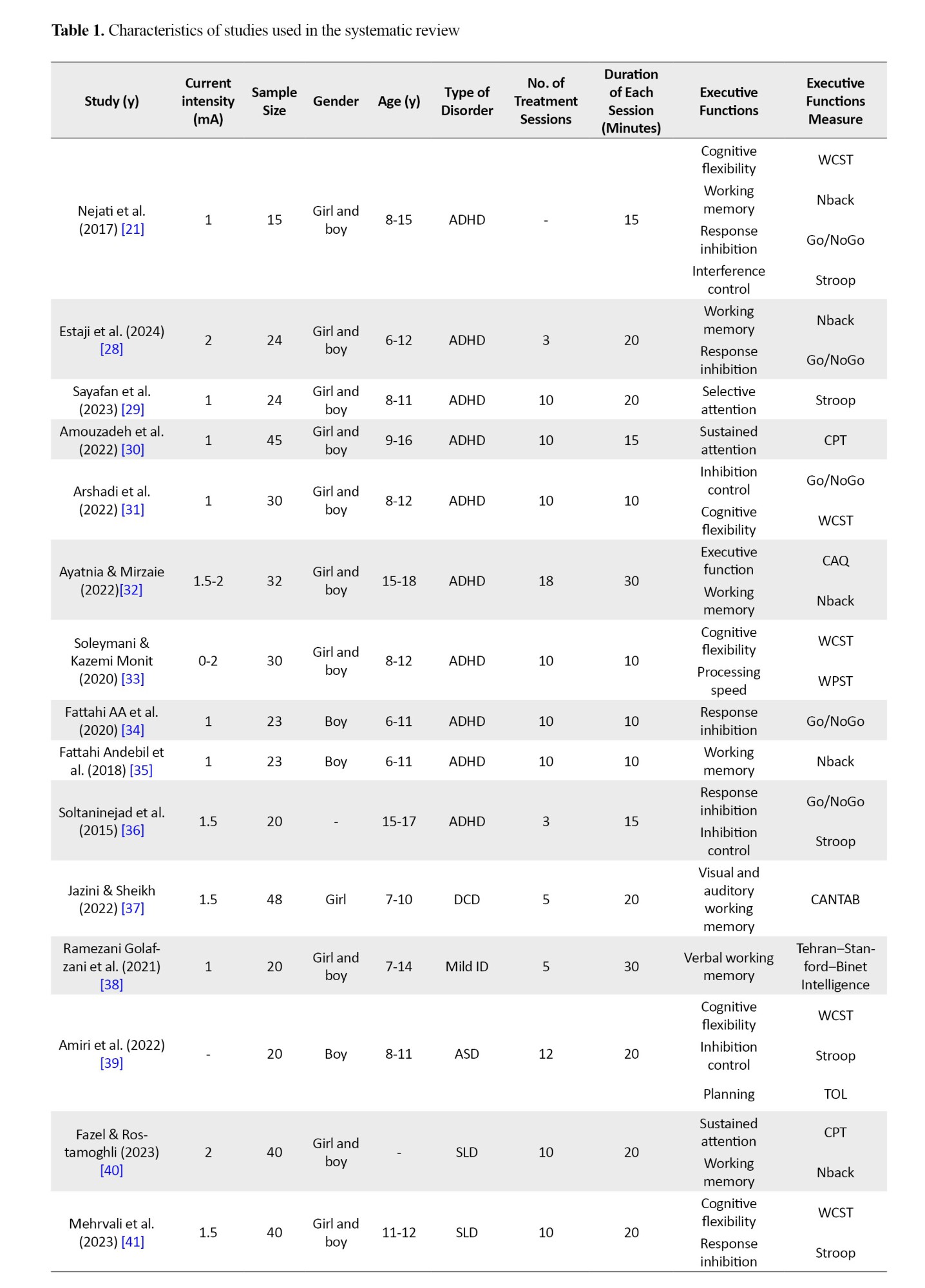
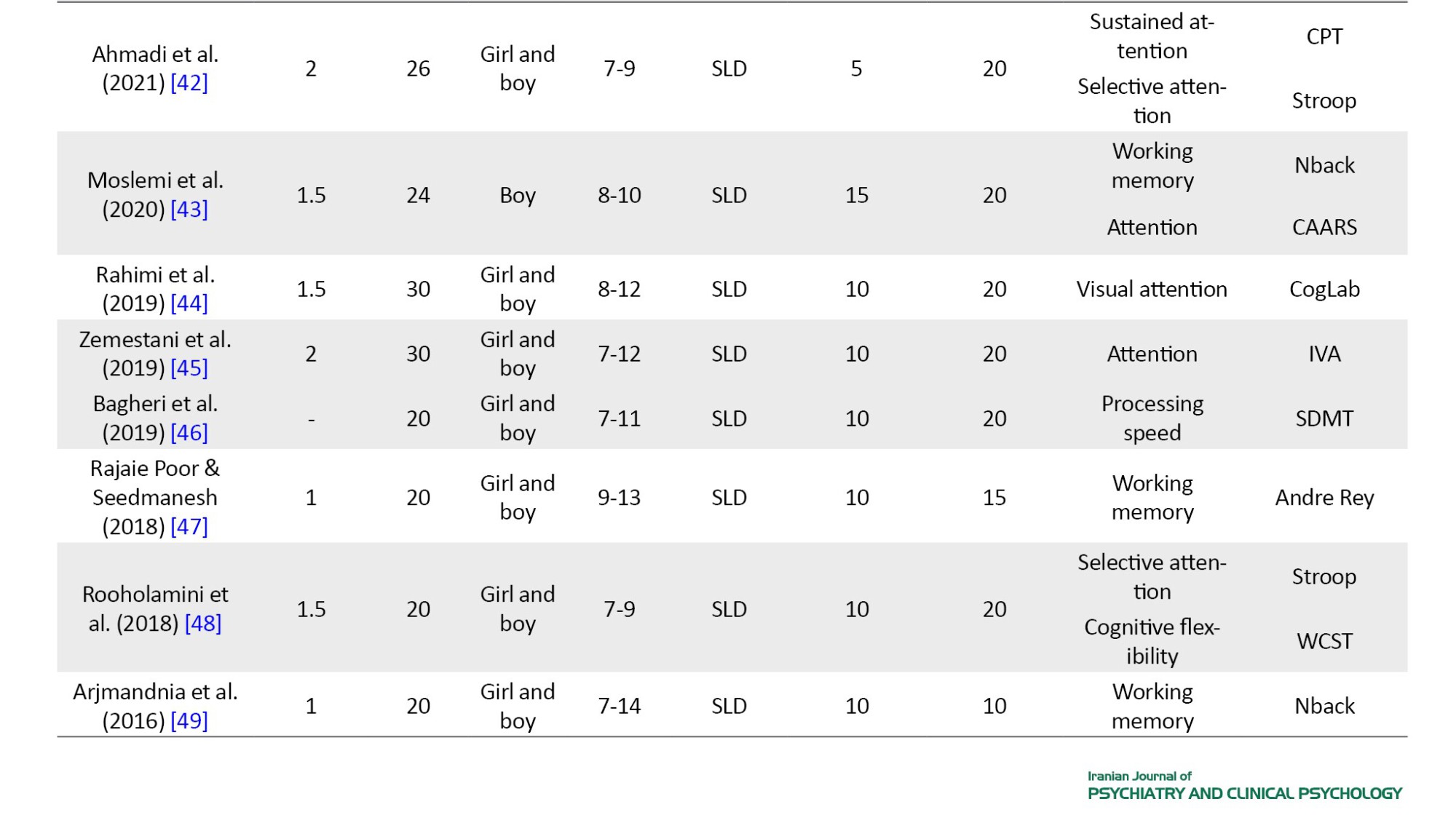
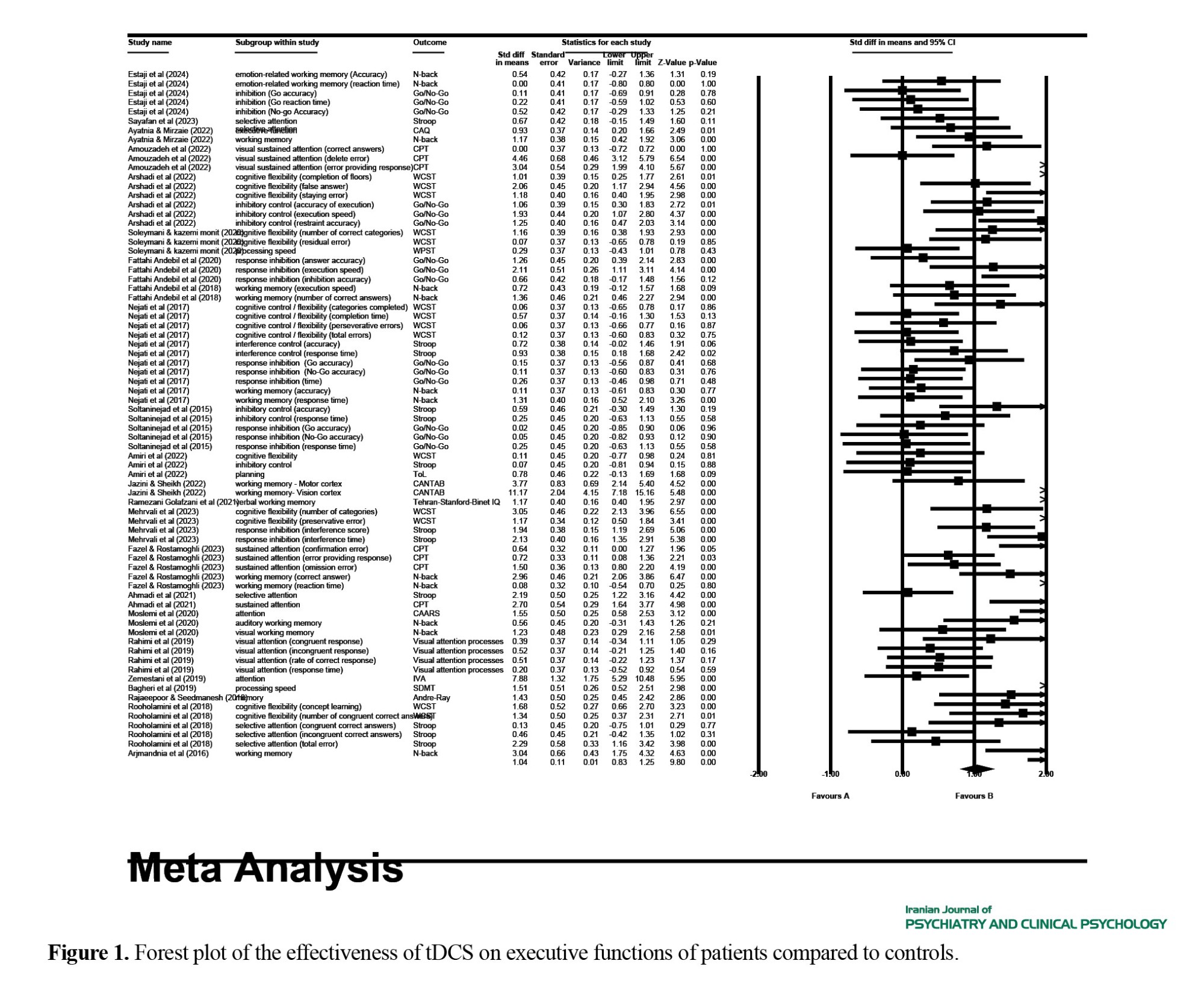
The effect size of tDCS on the executive functions was 1.04 (SMD=1.04, 95% CI, 0.83%, 1.25%; P<0.001). The effect size was statistically significant, indicating a significant impact of tDCS on the executive functions of Iranian children and adolescents with neurodevelopmental disorders. Forest plot of the effectiveness of tDCS on cognitive functions of patients compared to controls is shown in Figure 1. Based on the results of the trim-and-fill method, adding eight studies to the left side of the funnel plot make the mean of the funnel plot symmetrical.
Conclusion
This meta-analysis showed that tDCS was effective in improving executive functions in Iranian children and adolescents with neurodevelopmental disorders. The current research provides preliminary evidence for the therapeutic potential of tDCS for ADHD, ASD, and childhood and adolescent dyslexia.
The included studies had low methodological quality, as they lacked randomized clinical trials. Few studies reported follow-up data, so we did not have sufficient data to assess the persistence of the tDCS effect. There was a lack of sham tDCS in some studies. Therefore, future randomized, sham-controlled clinical trials and studies with follow-up periods are needed to assess the effectiveness of tDCS on executive functions in Iranian children and adolescents with neurodevelopmental disorders. Safety and tolerability indicators and side effects were not reported in the studies to demonstrate the safety of tDCS for children and adolescents. Therefore, future studies should use a standardized adverse event questionnaire to assess tolerance and adverse events of tDCS. Additionally, the included studies varied in terms of participants’ age, gender, and level of disorder, resulting in heterogeneous data from which our results were obtained. In addition, most of the studies examined the effect of tDCS on executive functions in children and adolescents with ADHD and SLD. There is a need for future studies to examine the effects of tDCS on executive functions in children and adolescents with other neurodevelopmental disorders, especially ASD.
Ethical Considerations
Compliance with ethical guidelines
This is a systematic review and meta-analysis with no human or animal samples; therefore, the need for an ethical approval code was waived.
Funding
This research did not receive any specific grant from funding agencies in the public, commercial, or not-for profit sectors.
Authors contributions
All authors contributed equally to the conception and design of the study, data collection and analysis, interpretation of the results, and drafting of the manuscript. Each author approved the final version of the manuscript for submission.
Conflicts of interest
The authors declare no conflicts of interest.
Neurodevelopmental disorders are psychiatric conditions that develop early in life and involve abnormalities in the central nervous system function. Many neurodevelopmental disorders, such as attention deficit/hyperactivity disorder (ADHD), specific learning disorder (SLD), developmental coordination disorder (DCD), and autism spectrum disorder (ASD), are characterized by deficits in executive functions. Impaired executive functions in children lead to a variety of problems, including aggression, inattention, and behavioral and communication problems. Transcranial direct current stimulation (tDCS) has been proposed as a promising treatment for the rehabilitation of neurodevelopmental disorders. Studies suggest that tDCS can improve memory, attention, and executive functions through mechanisms such as changes in resting membrane potential, cerebral blood flow, synaptic plasticity, neurotransmitter levels, and brain network connectivity. The effects of tDCS on executive functions in children and adolescents are contradictory across studies, and the evidence is limited. In addition, so far, no systematic review or meta-analysis has examined the effects of tDCS on executive functions in Iranian children and adolescents with neurodevelopmental disorders. Therefore, the present systematic review and meta-analysis aimed to investigate whether tDCS can improve executive functions in Iranian children and adolescents with neurodevelopmental disorders.
Methods
This is a systematic review and meta-analysis. The related studies were searched in the Web of Science, Scopus, PubMed, Scientific Information Database (SID), and the Comprehensive Portal for Humanities. The search was conducted on studies published from 2014 to 2024 using the following keywords and strategy: (“Transcranial direct current stimulation” OR “tDCS” OR “direct current stimulation”) AND (“executive function” OR “attention” OR “working memory” OR “cognitive flexibility” OR “inhibition” OR “processing speed” OR “planing”) AND (“neurodevelopmental disorders” “attention-deficit/hyperactivity disorder” OR “ADHD” OR “autism spectrum disorder” OR “ASD” OR “specific learning disorder” OR “SLD” OR “Communication disorders” OR “intellectual disability”) AND (“children” OR “adolescents” OR “teenagers”) AND (“Iran” OR “Iranian”).
PICO-SD criteria were used to design eligibility criteria:
1. Participants: Children (6-12 years) and adolescents (13-18 years) residing in Iran with neurodevelopmental disorders (ADHD, ASD, SLD, DCD, intellectual disability (ID), communication disorders),
2. Interventions: Experimental group with tDCS alone (anodal protocol),
3. Control: Control group with sham tDCS or no additional intervention,
4. Outcome: Executive functions (working memory, attention, inhibition, cognitive flexibility, planning, and processing speed),
5. Study design: Experimental or quasi-experimental studies with pre-test/post-test design and a control group. Two authors (Fateme Gheysari, Mehrdad Mazaheri) independently assessed the eligibility of studies.
Articles that met the inclusion criteria were selected for full-text review. Any disagreements about the eligibility of the studies were discussed and solved by reaching a consensus. The data were analyzed in CMA software, version 2. To measure the effect of tDCS, the standardized mean difference (SMD) was calculated as the difference between groups in mean values divided by the pooled standard deviation, with a 95% confidence interval (CI). Duval and Tweedie’s trim-and-fill method and funnel plots were used to analyze sensitivity and publication bias.
Results
A total of 536 articles were first retrieved. Irrelevant literature, review studies, duplicates, and case reports were identified and removed based on title and abstract reviews, resulting in 37 full-text articles being retrieved. Fourteen studies were excluded due to publication bias and lack of data on the mean and standard deviation of the control and experimental groups. Finally, 23 articles were included in the systematic review and meta-analysis. There were 74 effect sizes, and studies evaluated a total of 614 patients in the active tDCS, sham tDCS, and control groups. The characteristics of these studies are presented in Table 1.
The effect size of tDCS on the executive functions was 1.04 (SMD=1.04, 95% CI, 0.83%, 1.25%; P<0.001). The effect size was statistically significant, indicating a significant impact of tDCS on the executive functions of Iranian children and adolescents with neurodevelopmental disorders. Forest plot of the effectiveness of tDCS on cognitive functions of patients compared to controls is shown in Figure 1. Based on the results of the trim-and-fill method, adding eight studies to the left side of the funnel plot make the mean of the funnel plot symmetrical.
Conclusion
This meta-analysis showed that tDCS was effective in improving executive functions in Iranian children and adolescents with neurodevelopmental disorders. The current research provides preliminary evidence for the therapeutic potential of tDCS for ADHD, ASD, and childhood and adolescent dyslexia.
The included studies had low methodological quality, as they lacked randomized clinical trials. Few studies reported follow-up data, so we did not have sufficient data to assess the persistence of the tDCS effect. There was a lack of sham tDCS in some studies. Therefore, future randomized, sham-controlled clinical trials and studies with follow-up periods are needed to assess the effectiveness of tDCS on executive functions in Iranian children and adolescents with neurodevelopmental disorders. Safety and tolerability indicators and side effects were not reported in the studies to demonstrate the safety of tDCS for children and adolescents. Therefore, future studies should use a standardized adverse event questionnaire to assess tolerance and adverse events of tDCS. Additionally, the included studies varied in terms of participants’ age, gender, and level of disorder, resulting in heterogeneous data from which our results were obtained. In addition, most of the studies examined the effect of tDCS on executive functions in children and adolescents with ADHD and SLD. There is a need for future studies to examine the effects of tDCS on executive functions in children and adolescents with other neurodevelopmental disorders, especially ASD.
Ethical Considerations
Compliance with ethical guidelines
This is a systematic review and meta-analysis with no human or animal samples; therefore, the need for an ethical approval code was waived.
Funding
This research did not receive any specific grant from funding agencies in the public, commercial, or not-for profit sectors.
Authors contributions
All authors contributed equally to the conception and design of the study, data collection and analysis, interpretation of the results, and drafting of the manuscript. Each author approved the final version of the manuscript for submission.
Conflicts of interest
The authors declare no conflicts of interest.
References
- Dall'Aglio L, Muka T, Cecil CAM, Bramer WM, Verbiest MMPJ, Nano J, et al. The role of epigenetic modifications in neurodevelopmental disorders: A systematic review. Neuroscience and Biobehavioral Reviews. 2018; 94:17-30. [DOI:10.1016/j.neubiorev.2018.07.011] [PMID]
- Morris-Rosendahl DJ, Crocq M-A. Neurodevelopmental disorders-the history and future of a diagnostic concept. Dialogues in Clinical Neuroscience. 2020; 22(1):65-72. [DOI:10.31887/DCNS.2020.22.1/macrocq] [PMID]
- Maw KJ, Beattie G, Burns EJ. Cognitive strengths in neurodevelopmental disorders, conditions and differences: A critical review. Neuropsychologia. 2024; 197:108850. [DOI:10.1016/j.neuropsychologia.2024.108850] [PMID]
- Korzeniowski C, Ison MS, Difabio de Anglat H. A summary of the developmental trajectory of executive functions from birth to adulthood. In: Ángel Gargiulo P, Luis Mesones Arroyo H, editors. Psychiatry and neuroscience update: From epistemology to clinical psychiatry. New York: Springer Publishing; 2021. [DOI:10.1007/978-3-030-61721-9_33]
- Lucas I, Puteikis K, Sinha MD, Litwin M, Merkevicius K, Azukaitis K, et al. Knowledge gaps and future directions in cognitive functions in children and adolescents with primary arterial hypertension: A systematic review. Frontiers in Cardiovascular Medicine. 2022; 9:973793. [DOI:10.3389/fcvm.2022.973793] [PMID]
- Souissi S, Chamari K, Bellaj T. Assessment of executive functions in school-aged children: A narrative review. Frontiers in Psychology. 2022; 13:991699. [DOI:10.3389/fpsyg.2022.991699] [PMID]
- Hennessy A, Nichols ES, Al-Saoud S, Brossard-Racine M, Duerden EG. Identifying cognitive profiles in children with neurodevelopmental disorders using online cognitive testing. Clinical Child Psychology and Psychiatry. 2024; 29(2):591-607. [DOI:10.1177/13591045241228889] [PMID]
- Crisci G, Caviola S, Cardillo R, Mammarella IC. Executive functions in neurodevelopmental disorders: Comorbidity overlaps between attention deficit and hyperactivity disorder and specific learning disorders. Frontiers in Human Neuroscience. 2021; 15:594234. [DOI:10.3389/fnhum.2021.594234] [PMID]
- Abdolmohamadi K, Ashouri A, Ghadiri Sourman Abadi F, Mohammadzadeh A. [Prediction of executive functions based on impairment in motor and linguistic growth (Persian)]. Iranian Journal of Psychiatry and Clinical Psychology. 2020; 26(2):188-99. [DOI:10.32598/ijpcp.26.2.227.12]
- Flori V, Lettieri M, Prandi R. Development profiles of executive functions in preschool age: Observational study in generalized development disorder. Journal of Advanced Health Care. 2023; 5(2):1-11. [DOI:10.36017/jahc202352232]
- Sousa B, Martins J, Castelo-Branco M, Gonçalves J. Transcranial direct current stimulation as an approach to mitigate neurodevelopmental disorders affecting excitation/inhibition balance: Focus on autism spectrum disorder, schizophrenia, and attention deficit/hyperactivity disorder. Journal of Clinical Medicine. 2022; 11(10):2839. [DOI:10.3390/jcm11102839] [PMID]
- Zhang X, Huang M, Yu Y, Zhong X, Dai S, Dai Y, et al. Is Transcranial Direct Current Stimulation Effective For Cognitive Dysfunction In Substance Use Disorders? A systematic review. Brain Sciences. 2024; 14(8):754. [DOI:10.3390/brainsci14080754] [PMID]
- Galli G, Vadillo MA, Sirota M, Feurra M, Medvedeva A. A systematic review and meta-analysis of the effects of transcranial direct current stimulation (tDCS) on episodic memory. Brain Stimulation. 2019; 12(2):231-41. [DOI:10.1016/j.brs.2018.11.008] [PMID]
- Talar K, Vetrovsky T, van Haren M, Négyesi J, Granacher U, Váczi M, et al. The effects of aerobic exercise and transcranial direct current stimulation on cognitive function in older adults with and without cognitive impairment: A systematic review and meta-analysis. Ageing Research Reviews. 2022; 81:101738. [DOI:10.1016/j.arr.2022.101738] [PMID]
- Buchanan DM, Bogdanowicz T, Khanna N, Lockman-Dufour G, Robaey P, D’Angiulli A. Systematic review on the safety and tolerability of transcranial direct current stimulation in children and adolescents. Brain Sciences. 2021; 11(2):212. [DOI:10.3390/brainsci11020212] [PMID]
- Zewdie E, Ciechanski P, Kuo HC, Giuffre A, Kahl C, King R, et al. Safety and tolerability of transcranial magnetic and direct current stimulation in children: Prospective single center evidence from 3.5 million stimulations. Brain Stimulation. 2020; 13(3):565-75. [DOI:10.1016/j.brs.2019.12.025] [PMID]
- Lee JC, Kenney-Jung DL, Blacker CJ, Doruk Camsari D, Lewis CP. Transcranial direct current stimulation in child and adolescent psychiatric disorders. Child and Adolescent Psychiatric Clinics of North America. 2019; 28(1):61-78. [DOI:10.1016/j.chc.2018.07.009] [PMID]
- Garcia-Gonzalez S, Lugo-Marin J, Setien-Ramos I, Gisbert-Gustemps L, Arteaga-Henriquez G, Diez-Villoria E, et al. Transcranial direct current stimulation in Autism Spectrum Disorder: A systematic review and meta-analysis. European Neuropsychopharmacology. 2021; 48:89-109. [DOI:10.1016/j.euroneuro.2021.02.017] [PMID]
- Narmashiri A, Akbari F. The effects of transcranial direct current stimulation (tDCS) on the cognitive functions: A systematic review and meta-analysis. Neuropsychology Review. 2025; 35(1):126-52. [DOI:10.1007/s11065-023-09627-x] [PMID]
- Mohammadi Molod S, Vahedi S, Heysieattalab S, Soltanlou M. Meta-analysis of the effectiveness of transcranial electrical stimulation interventions on executive function and mathematical performance in children with specific learning disorder. Quarterly Journal of Child Mental Health. 2023; 10(3):78-99. [DOI:10.61186/jcmh.10.3.7]
- Nejati V, Salehinejad MA, Nitsche MA, Najian A, Javadi AH. Transcranial direct current stimulation improves executive dysfunctions in ADHD: Implications for inhibitory control, interference control, working memory, and cognitive flexibility. Journal of Attention Disorders. 2020; 24(13):1928-43. [DOI:10.1177/1087054717730611] [PMID]
- Salehinejad MA, Nejati V, Mosayebi-Samani M, Mohammadi A, Wischnewski M, Kuo MF, et al. Transcranial direct current stimulation in ADHD: A systematic review of efficacy, safety, and protocol-induced electrical field modeling results. Neuroscience Bulletin. 2020; 36(10):1191-212. [DOI:10.1007/s12264-020-00501-x] [PMID]
- Gallop L, Westwood SJ, Lewis Y, Campbell IC, Schmidt U. Effects of transcranial direct current stimulation in children and young people with psychiatric disorders: A systematic review. European Child & Adolescent Psychiatry. 2024; 33(9):3003-23. [DOI:10.1101/2022.03.17.22272541]
- Yan RB, Zhang XL, Li YH, Hou JM, Chen H, Liu HL. Effect of transcranial direct-current stimulation on cognitive function in stroke patients: A systematic review and meta-analysis. Plos One. 2020; 15(6):e0233903. [DOI:10.1371/journal.pone.0233903] [PMID]
- Lee JY, Chung JH, Kang DH, Lee JW, Moon HS, Yoo TK, et al. Quality assessment of randomized controlled trials published in the korean journal of urology over the past 20 years. Korean Journal of Urology. 2011; 52(9):642-6. [DOI:10.4111/kju.2010.51.9.642] [PMID]
- Shi L, Lin L. The trim-and-fill method for publication bias: Practical guidelines and recommendations based on a large database of meta-analyses. Medicine. 2019; 98(23):e15987. [DOI:10.1097/MD.0000000000015987] [PMID]
- Page MJ, McKenzie JE, Bossuyt PM, Boutron I, Hoffmann TC, Mulrow CD, Shamseer L, et al. The PRISMA 2020 statement: An updated guideline for reporting systematic reviews. BMJ. 2021; 372:n71. [DOI:10.1136/bmj.n71] [PMID]
- Estaji R, Hosseinzadeh M, Arabgol F, Nejati V. Transcranial direct current stimulation (tDCS) improves emotion regulation in children with attention-deficit hyperactivity disorder (ADHD). Scientific Reports. 2024; 14(1):13889. [DOI:10.1038/s41598-024-64886-9] [PMID]
- Sayafan N, Hajiyakhchali A, Shehniyailagh M. [The effect of transcranial direct current stimulation on attention and electroencephalographic pattern in children with attention deficit disorder (Persian)]. Psychological Achievements. 2023; 30(2):81-98. [DOI:10.22055/psy.2022.40786.2847]
- Amouzadeh F, Moradi H, Gharayagh Zandi H, Rostami R, Moghadamzadeh A. [Impact of transcranial direct current stimulation (tDCS) on the visual sustain attention of ADHD student-athletes (Persian)]. Journal of Sports and Motor Development and Learning. 2022; 14(2):17-33. [DOI:10.22059/jmlm.2021.325671.1586]
- Arshadi S, Nokani M, Asgari M, Sepahvand T. [Comparison of the effectiveness of cognitive rehabilitation of inhibitory control, electrical stimulation of the brain and the combination of inhibitory control and electrical stimulation of the brain on executive functions (behavioral inhibition and cognitive flexibility) in children with ADHD (Persian)]. Journal of School Psychology. 2022; 11(3):6-27. [DOI:10.22098/jsp.2022.1786]
- Ayatnia F, Mirzaie P. Investigate the effect transcranial direct-current stimulation of brain (tdcs) on cognitive ability and working memory of students with attention deficit hyperactivity disorder. Neuropsychology. 2022; 7(27):37-46. [DOI:10.30473/clpsy.2022.61224.1632]
- Soleymani M, Kazemimonir N. [The effectiveness of transcranial direct current stimulation (T DCS) on increase cognitive flexibility and processing speed among children with attention deficit/hyperactivity (ADHD) (Persian)]. Educational Psychology. 2020; 16(57):305-26. [DOI:10.22054/jep.2020.56456.3181]
- Fattahi AA, Saberi H, Kazemi Kavaki A. [The effectiveness of neurofeedback and "transcranial direct current stimulation" on the executive function of response inhibition of boys 6 to 11 years with attention deficit-hyperactivity disorder (Persian)]. Journal of Health Promotion Management. 2020; 9(3):49-60. [Link]
- Fattahi Andebil A, Saberi H, Kazemi Kavaki A. Effectiveness of cognitive behavioral group play therapy and transcranial direct current stimulation on executive function of working memory and response inhibition of children with attention deficit-hyperactivity disorder. Neuropsychology. 2018; 4(14):73-90. [DOI:10.30473/clpsy.2019.42393.1369]
- Soltaninejad Z, Nejati V, Ekhtiari H. Effect of anodal and cathodal transcranial direct current stimulation on DLPFC on modulation of inhibitory control in ADHD. Journal of Attention Disorders. 2019; 23(4):325-32. [DOI:10.1177/1087054715618792] [PMID]
- Jazini F, Sheikh M. [Comparison of the effect of direct transcranial electrical stimulation of motor and vision cortex on working memory and motor performance in children with developmental coordination disorder (Persian)]. The Neuroscience Journal of Shefaye Khatam. 2022; 10(3):1-12. [DOI:10.52547/shefa.10.3.1]
- Ramezani Golafzani N, Karami A, Rostami R. [The effect of transcranial direct current stimulation (tDCS) on the verbal working memory in children with mild intellectual disabilities (Persian)]. Psychological Methods and Models. 2021; 12(45):49-58. [DOI:10.30495/jpmm.2021.26570.3245]
- Amiri MA, Esmaili SK, Saei S, Zarei MA. Effectiveness of transcranial direct current stimulation in behavioral and cognitive aspects of executive function in children with autism spectrum disorder. Iranian Journal of Psychiatry and Behavioral Sciences. 2022; 16(4):e124236. [DOI:10.5812/ijpbs-124236]
- Fazel S, Rostamoghli Z. [The effectiveness of Transcranial direct current stimulation (tDCS) on attention and working memory in students with dyslexia (Persian)]. Journal of Learning Disabilities. 2023; 13(1):17-28. [DOI:10.22098/jld.2023.12856.2097]
- Mehrvali F, Atash Afrouz A, Omidian M. [Comparison of the effectiveness of transcranial direct current stimulation and sensorimotor integration on executive functions) cognitive flexibility and response inhibition (of students with specific learning disabilities (Persian)]. Journal of Learning Disabilities. 2023; 12(4):114-99. [DOI:10.22098/jld.2023.13183.2104]
- Ahmadi A, Masomi F, Mardani, LS. [The effect of transcranial magnetic stimulation of brain over selective attention and continuous function of children suffering from specific learning disability disorder (Persian)]. Journal of Exceptional Children. 2022; 22(2):37-44. [Link]
- Moslemi B, Azmodeh M, Tabatabaei SM, Alivandi Vafa M. [The effectiveness of transcranial direct current stimulation (tDCS) on attention and visual-auditory working memory in children with dyslexia (Persian)]. Journal of Exceptional Children. 2021; 20(4):104-93. [Link]
- Rahimi M, Heidari A, Naderi F, Makvandi B, Bakhtiyarpour S. [Comparison of cognitive training method and transcranial direct current stimulation (tDCS) on the visual attention processes in the students with special learning disorders (Persian)]. International Journal of Behavioral Sciences. 2019; 12(4):162-8. [Link]
- Zemestani M, Izadpanah E, Solaimany S. [Comparison of the effectiveness of two methods of transcranial direct current stimulation (T-Dcs) and play therapy on attention and psycho-motor function of children with learning disabilities: A semi-experimental design (Persian)]. Studies in Medical Sciences. 2019; 30(3):174-86. [Link]
- Bagheri M, Moradi A, Hassani AP. [Bilingualism, dyslexia, transcranial direct current stimulation (tDCS), computational cognitive rehabilitation, speed of processing, working memory (Persian)]. Journal of Cognitive Psychology. 2019; 6(4):25-34. [Link]
- Rajaie Pour MS, Saeidmanesh M. The effectiveness of transcranial direct current stimulation (tDCS) from the Skull on Memory students with especially learning disorders. Neuropsychology. 2018; 4(13):67-84. [Link]
- Rooholamini S, Soleymani M, Vaghef L. [Effectiveness of transcranial direct current stimulation (TDCS) onexecutive functions (selective attention and flexibility) in students with dyslexia (Persian)]. Journal of Learning Disabilities. 2018; 8(1):23-41. [DOI:10.22098/jld.2018.707]
- Arjmandnia A, Asbaghi M, Afrooz G, Rahmanian M. [The effect of transcranial direct current stimulation (tDCS) on improving working memory performance in children with mathematical disorder (Persian)]. Journal of Learning Disabilities. 2016; 6(1):7-25. [Link]
- Li S, Tang Y, Zhou Y, Ni Y. Effects of transcranial direct current stimulation on cognitive function in older adults with and without mild cognitive impairment: A systematic review and meta-analysis of randomized controlled trials. Gerontology. 2024; 70(5):544-60. [DOI:10.1159/000537848] [PMID]
- Ma H, Zhao K, Jia C, You J, Zhou M, Wang T, et al. Effect of transcranial direct current stimulation for patients with disorders of consciousness: A systematic review and meta-analysis. Frontiers in Neuroscience. 2023; 16:1081278. [DOI:10.3389/fnins.2022.1081278] [PMID]
- Fathi Azar E, Hejazi-Shirmard M, Mirzaie H. Cognitive enhancement through technology: A review of transcranial electrical stimulation (TES) interventions in children and adolescents with specific learning disabilities. Child. 2024; 50(5):e13318. [DOI:10.1111/cch.13318] [PMID]
- Khaleghi A, Zarafshan H, Vand SR, Mohammadi MR. Effects of non-invasive neurostimulation on autism spectrum disorder: A systematic review. Clinical Psychopharmacology and Neuroscience. 2020; 18(4):527-52. [DOI:10.9758/cpn.2020.18.4.527] [PMID]
- Cosmo C, DiBiasi M, Lima V, Grecco LC, Muszkat M, Philip NS, et al. A systematic review of transcranial direct current stimulation effects in attention-deficit/hyperactivity disorder. Journal of Affective Disorders. 2020; 276:1-13. [DOI:10.1016/j.jad.2020.06.054] [PMID]
- Salehinejad MA, Wischnewski M, Nejati V, Vicario CM, Nitsche MA. Transcranial direct current stimulation in attention-deficit hyperactivity disorder: A meta-analysis of neuropsychological deficits. Plos One. 2019; 14(4):e0215095. [DOI:10.1371/journal.pone.0215095] [PMID]
- Salehinejad MA, Ghanavati E, Glinski B, Hallajian AH, Azarkolah A. A systematic review of randomized controlled trials on efficacy and safety of transcranial direct current stimulation in major neurodevelopmental disorders: ADHD, autism, and dyslexia. Brain and Behavior. 2022; 12(9):e2724. [DOI:10.1002/brb3.2724] [PMID]
Type of Study: Rewie |
Subject:
Psychiatry and Psychology
Received: 2024/09/25 | Accepted: 2025/06/6 | Published: 2025/07/10
Received: 2024/09/25 | Accepted: 2025/06/6 | Published: 2025/07/10
| Rights and permissions | |
 |
This work is licensed under a Creative Commons Attribution-NonCommercial 4.0 International License. |

Copyright © The Author(s);
This is an open access article distributed under the terms of the Creative Commons Attribution License (CC-By-NC), which permits use, distribution, and reproduction in any medium, provided the original work is properly cited and is not used for commercial purposes.
Contact Information