Sat, Oct 24, 2026
| فارسی
Volume 31, Issue 1 (Continuously Updated 2025)
IJPCP 2025, 31(1): 0-0 |
Back to browse issues page



Download citation:
BibTeX | RIS | EndNote | Medlars | ProCite | Reference Manager | RefWorks
Send citation to:


BibTeX | RIS | EndNote | Medlars | ProCite | Reference Manager | RefWorks
Send citation to:
Sayarifard A, Moradi A, Jamshidi E, Moradi M, Ameri P, Amjadian M et al . Exploring the Challenges and Solutions for Implementing the Teen Mental Health First Aid Programs in Iranian Schools: A Qualitative Study. IJPCP 2025; 31 (1)
URL: http://ijpcp.iums.ac.ir/article-1-4456-en.html
URL: http://ijpcp.iums.ac.ir/article-1-4456-en.html
Azadeh Sayarifard1 

 , Ali Moradi2 , Ensiyeh Jamshidi3 , Maziar Moradi4 , Pegah Ameri5 , Mohyeddin Amjadian6 , Maryam Nazari7
, Ali Moradi2 , Ensiyeh Jamshidi3 , Maziar Moradi4 , Pegah Ameri5 , Mohyeddin Amjadian6 , Maryam Nazari7
1- Community Based Participatory Research Center, Tehran University of Medical Sciences, Tehran, Iran. & Center for Academic and Health Policy, Tehran University of Medical Sciences, Tehran, Iran.
2- Occuptional Health and Safety Research Center, Hamadan University of Medical Sciences, Hamadan, Iran.
3- Department of Health Education and Promotion, School of Public Health, Tehran University of Medical Sciences, Tehran, Iran. & Student’s Scientific Research Center, Tehran University of Medical Sciences, Tehran, Iran.
4- Asadabad County Health Center, Asadabad University of Medical Sciences, Asadabad, Iran.
5- Department of Epidemiology, School of Health, Hamadan University of Medical Sciences, Hamadan, Iran.
6- Department of Clinical Psychology, School of Medicine, Kurdistan University of Medical Sciences, Sanandaj, Iran.
7- Department of Management, Policy and Health Economics, Center for Academic and Health Policy (CAHP), School of Public Health, Tehran University of Medical Sciences (TUMS), Tehran, Iran. ,mnazari@razi.tums.ac.ir
2- Occuptional Health and Safety Research Center, Hamadan University of Medical Sciences, Hamadan, Iran.
3- Department of Health Education and Promotion, School of Public Health, Tehran University of Medical Sciences, Tehran, Iran. & Student’s Scientific Research Center, Tehran University of Medical Sciences, Tehran, Iran.
4- Asadabad County Health Center, Asadabad University of Medical Sciences, Asadabad, Iran.
5- Department of Epidemiology, School of Health, Hamadan University of Medical Sciences, Hamadan, Iran.
6- Department of Clinical Psychology, School of Medicine, Kurdistan University of Medical Sciences, Sanandaj, Iran.
7- Department of Management, Policy and Health Economics, Center for Academic and Health Policy (CAHP), School of Public Health, Tehran University of Medical Sciences (TUMS), Tehran, Iran. ,
Full-Text [PDF 7663 kb]
(772 Downloads)
| Abstract (HTML) (1184 Views)
Full-Text: (553 Views)
Introduction
Adolescence is a period associated with significant physical and psychological changes. Discrimination, poverty, abuse, violence, deprivation, decreased interpersonal relationships, isolation, lack of participation in group activities, and dependence on virtual social media increase the risk of developing mental health disorders in adolescents. Over 80% of adolescents fail to access specialized mental health services early due to reasons such as a lack of awareness of symptoms. Therefore, promoting mental health literacy is now considered a preventive intervention for this age group. One of the recognized, effective, and quick interventions in this regard is the mental health first aid (MHFA) educational program. The MHFA consists of measures taken by friends, family members, and colleagues of an individual experiencing a mental health problem to prevent the worsening of their condition. The MHFA should continue until the availability of specialized services or when the individual’s mental issue is resolved. Teen MHFA (tMHFA) teaches how to identify warning signs, communicate, notify adults, recognize specialized support, and take action in emergencies; covering anxiety, depression, substances, psychosis, self-harm, and bullying. Approximately one-fifth of Iranian children and adolescents suffer from at least one significant mental health issue; however, fewer national studies have used the MHFA. Therefore, the present research aimed to analyze the factors affecting the implementation of tMHFA in Iranian schools.
Methods
This is a qualitative study using inductive content analysis, conducted in 2021. In-depth and semi-structured interviews were used to collect data. The target population consists of high school students (second stage) in Tehran, their parents, and professionals from the Ministry of Health and Medical Education, comprehensive health centers affiliated with the Tehran municipality, and NGOs. Participants were purposively selected to achieve maximum variation (n=34). The included criteria were willingness to participate in the study and membership in one of three target groups (adolescents, parents, experts). Exclusion criteria were withdrawal, incomplete interviews, non-membership in target groups, or inability to communicate effectively due to illness or specific conditions. Interviews were conducted using open-ended and semi-structured questions, which were designed based on a review of the literature. The questions surveyed nine domains: prior knowledge of MHFA programs, familiarity with MHFA programs, educational needs, features of a school-based tMHFA program, barriers/facilitators/strategies (individual/internal/external), roles of key actors, and overall program effectiveness. The face and content validity of the questions were confirmed by several faculty members of medical universities. Data analysis was performed using Braun and Clarke’s 6-step thematic analysis method based on an inductive approach. After the researchers reached a consensus on meaningful codes, the data were analyzed using the MAXQDA software, version 2020. To ensure the trustworthiness of the data, the criteria of credibility, dependability, confirmability, and transferability were used.
Results
Most of the participants were experts and professionals (35.3%). In terms of education level, all adults, including parents and experts, had university degrees. Fifty percent of the participants were females. The challenges and corresponding solutions related to implementing the tMHFA programs in Iranian schools were categorized into three themes: characteristics/tendencies of students, infrastructure/available resources, and the implementation process of the educational program (Table 1).
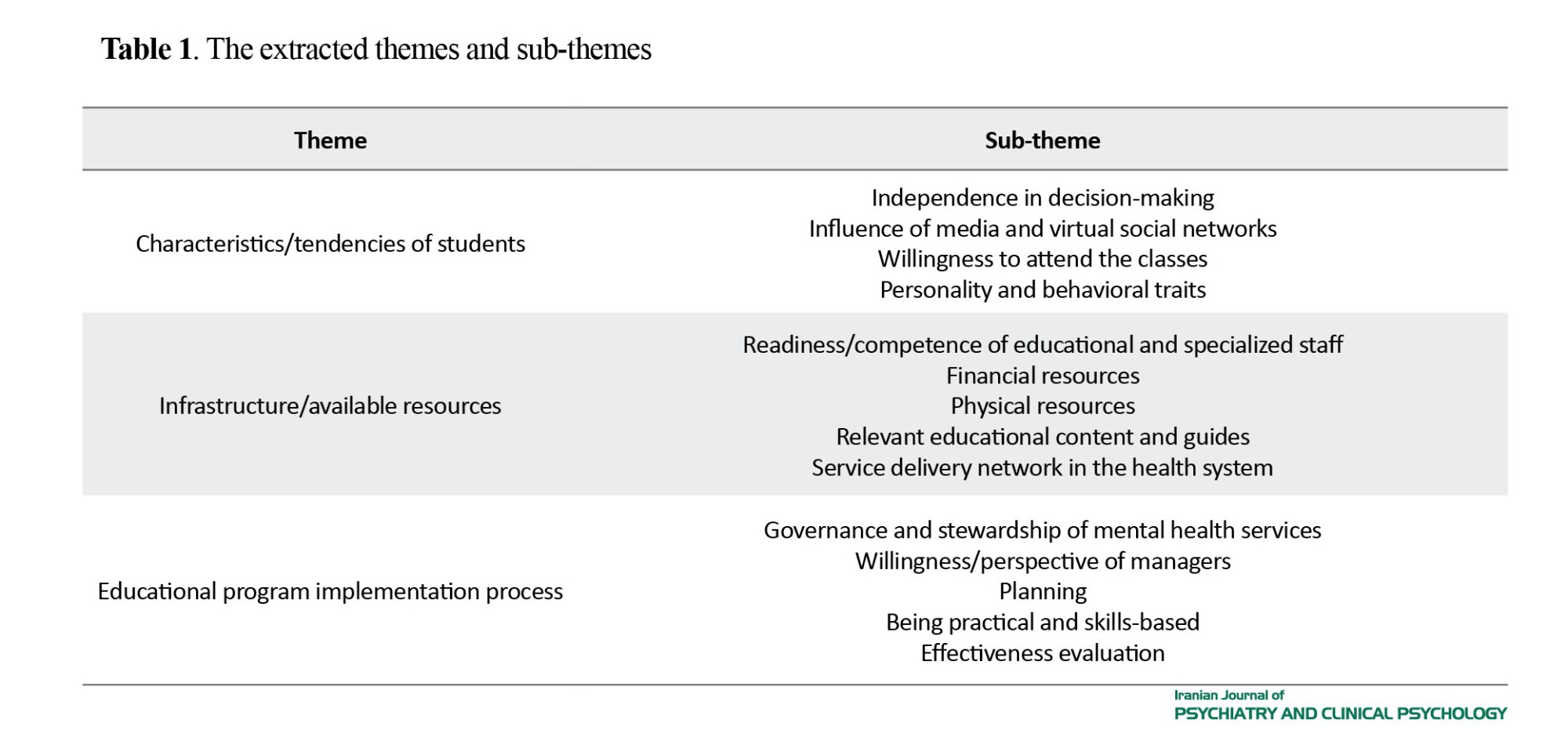
Many experts perceived that most of the challenges related to the implementation of the tMHFA programs in schools was related to infrastructure/available resources. Moreover, the proposed solutions were primarily related to the implementation process of the educational program. The most important challenges were related to the educational content in the infrastructure/available resources theme, and the adolescents’ willingness to attend the classes in the characteristics/tendencies of students theme. The highest number of proposed solutions were related to the relevant educational content (in the infrastructure/available resources theme) and effectiveness evaluation (in the characteristics/tendencies of students theme).
Conclusion
The implementation of the tMHFA program in Iranian schools faces a wide range of challenges, including cultural and social factors (e.g. mental health taboos and distrust in the education system), resource deficiencies (e.g. lack of skilled staff and financial resources), and design and implementation flaws (e.g. substandard content, outdated teaching methods, and limited adolescent participation). Useful strategies to overcome these challenges are as follows: Appropriate legislation and clear governance arrangements, involving adolescents in the program’s design and evaluation, empowering and involving school staff and families, integrating the program into the routine school activities as much as possible, coordination among governmental, private, and civil organizations to maximize resources, leveraging media and online capacities, offering incentives such as program certificates, informing by influencers to increase awareness, employing qualified staff as instructors, integrating the program into the health system and in full coordination with the healthcare network and establishing a rigorous monitoring framework to closely monitor effectiveness and gather feedback. Finally, it is recommended that the tMHFA program be implemented as a pilot study in several schools in Iran for one to two years. Additionally, creating a specialized website and virtual channel for program documentation can help ensure that the knowledge of learners remains up to date, facilitate the exchange of ideas about the course and aid experiences, and increase public awareness.
Ethical Considerations
Compliance with ethical guidelines
This study was approved by the Ethics Committee of Tehran University of Medical Sciences, Tehran, Iran (Code: IR.TUMS.VCR.REC.1397.1122).
Funding
This study was funded by Tehran University of Medical Sciences, Tehran, Iran (Grant No.: 97-03-62-40377).
Authors contributions
All authors contributed equally to the conception and design of the study, data collection and analysis, interpretation of the results, and drafting of the manuscript. Each author approved the final version of the manuscript for submission.
Conflicts of interest
The authors declare no conflict of interest.
Acknowledgments
The authors would like to thank the parents, adolescents, and the educational staff of the selected schools for their sincere assistance in this study.
Adolescence is a period associated with significant physical and psychological changes. Discrimination, poverty, abuse, violence, deprivation, decreased interpersonal relationships, isolation, lack of participation in group activities, and dependence on virtual social media increase the risk of developing mental health disorders in adolescents. Over 80% of adolescents fail to access specialized mental health services early due to reasons such as a lack of awareness of symptoms. Therefore, promoting mental health literacy is now considered a preventive intervention for this age group. One of the recognized, effective, and quick interventions in this regard is the mental health first aid (MHFA) educational program. The MHFA consists of measures taken by friends, family members, and colleagues of an individual experiencing a mental health problem to prevent the worsening of their condition. The MHFA should continue until the availability of specialized services or when the individual’s mental issue is resolved. Teen MHFA (tMHFA) teaches how to identify warning signs, communicate, notify adults, recognize specialized support, and take action in emergencies; covering anxiety, depression, substances, psychosis, self-harm, and bullying. Approximately one-fifth of Iranian children and adolescents suffer from at least one significant mental health issue; however, fewer national studies have used the MHFA. Therefore, the present research aimed to analyze the factors affecting the implementation of tMHFA in Iranian schools.
Methods
This is a qualitative study using inductive content analysis, conducted in 2021. In-depth and semi-structured interviews were used to collect data. The target population consists of high school students (second stage) in Tehran, their parents, and professionals from the Ministry of Health and Medical Education, comprehensive health centers affiliated with the Tehran municipality, and NGOs. Participants were purposively selected to achieve maximum variation (n=34). The included criteria were willingness to participate in the study and membership in one of three target groups (adolescents, parents, experts). Exclusion criteria were withdrawal, incomplete interviews, non-membership in target groups, or inability to communicate effectively due to illness or specific conditions. Interviews were conducted using open-ended and semi-structured questions, which were designed based on a review of the literature. The questions surveyed nine domains: prior knowledge of MHFA programs, familiarity with MHFA programs, educational needs, features of a school-based tMHFA program, barriers/facilitators/strategies (individual/internal/external), roles of key actors, and overall program effectiveness. The face and content validity of the questions were confirmed by several faculty members of medical universities. Data analysis was performed using Braun and Clarke’s 6-step thematic analysis method based on an inductive approach. After the researchers reached a consensus on meaningful codes, the data were analyzed using the MAXQDA software, version 2020. To ensure the trustworthiness of the data, the criteria of credibility, dependability, confirmability, and transferability were used.
Results
Most of the participants were experts and professionals (35.3%). In terms of education level, all adults, including parents and experts, had university degrees. Fifty percent of the participants were females. The challenges and corresponding solutions related to implementing the tMHFA programs in Iranian schools were categorized into three themes: characteristics/tendencies of students, infrastructure/available resources, and the implementation process of the educational program (Table 1).
Many experts perceived that most of the challenges related to the implementation of the tMHFA programs in schools was related to infrastructure/available resources. Moreover, the proposed solutions were primarily related to the implementation process of the educational program. The most important challenges were related to the educational content in the infrastructure/available resources theme, and the adolescents’ willingness to attend the classes in the characteristics/tendencies of students theme. The highest number of proposed solutions were related to the relevant educational content (in the infrastructure/available resources theme) and effectiveness evaluation (in the characteristics/tendencies of students theme).
Conclusion
The implementation of the tMHFA program in Iranian schools faces a wide range of challenges, including cultural and social factors (e.g. mental health taboos and distrust in the education system), resource deficiencies (e.g. lack of skilled staff and financial resources), and design and implementation flaws (e.g. substandard content, outdated teaching methods, and limited adolescent participation). Useful strategies to overcome these challenges are as follows: Appropriate legislation and clear governance arrangements, involving adolescents in the program’s design and evaluation, empowering and involving school staff and families, integrating the program into the routine school activities as much as possible, coordination among governmental, private, and civil organizations to maximize resources, leveraging media and online capacities, offering incentives such as program certificates, informing by influencers to increase awareness, employing qualified staff as instructors, integrating the program into the health system and in full coordination with the healthcare network and establishing a rigorous monitoring framework to closely monitor effectiveness and gather feedback. Finally, it is recommended that the tMHFA program be implemented as a pilot study in several schools in Iran for one to two years. Additionally, creating a specialized website and virtual channel for program documentation can help ensure that the knowledge of learners remains up to date, facilitate the exchange of ideas about the course and aid experiences, and increase public awareness.
Ethical Considerations
Compliance with ethical guidelines
This study was approved by the Ethics Committee of Tehran University of Medical Sciences, Tehran, Iran (Code: IR.TUMS.VCR.REC.1397.1122).
Funding
This study was funded by Tehran University of Medical Sciences, Tehran, Iran (Grant No.: 97-03-62-40377).
Authors contributions
All authors contributed equally to the conception and design of the study, data collection and analysis, interpretation of the results, and drafting of the manuscript. Each author approved the final version of the manuscript for submission.
Conflicts of interest
The authors declare no conflict of interest.
Acknowledgments
The authors would like to thank the parents, adolescents, and the educational staff of the selected schools for their sincere assistance in this study.
References
- Nobre J, Oliveira AP, Monteiro F, Sequeira C, Ferré-Grau C. Promotion of mental health literacy in adolescents: A scoping review. International Journal of Environmental Research and Public Health. 2021; 18(18):9500. [DOI:10.3390/ijerph18189500] [PMID]
- Seedaket S, Turnbull N, Phajan T, Wanchai A. Improving mental health literacy in adolescents: Systematic review of supporting intervention studies. Tropical Medicine & International Health. 2020; 25(9):1055-64. [DOI:10.1111/tmi.13449] [PMID]
- Aguirre Velasco A, Cruz ISS, Billings J, Jimenez M, Rowe S. What are the barriers, facilitators and interventions targeting help-seeking behaviours for common mental health problems in adolescents? A systematic review. BMC Psychiatry. 2020; 20(1):293. [DOI:10.1186/s12888-020-02659-0] [PMID]
- Zhang X, Yue H, Hao X, Liu X, Bao H. Exploring the relationship between mental health literacy and psychological distress in adolescents: A moderated mediation model. Preventive Medicine Reports. 2023; 33:102199. [DOI:10.1016/j.pmedr.2023.102199] [PMID]
- Attygalle UR, Perera H, Jayamanne BDW. Mental health literacy in adolescents: Ability to ecognize problems, helpful interventions and outcomes. Child and Adolescent Psychiatry and Mental Health. 2017; 11(1):1-8. [DOI:10.1186/s13034-017-0176-1] [PMID]
- Shahraki-Mohammadi A, Panahi S, Ashouri A, Sayarifard A. Important Systemic Factors For Improving Adolescent Mental Health Literacy. Iranian Journal of Psychiatry. 2023; 18(1):45. [DOI:10.18502/ijps.v18i1.11412] [PMID]
- Zeidabadi B, Khodayarian M, Sadeghi R, Jambarsang S, Mohseni M. Validation and evaluation of school-based mental health literacy training program “The Guide Cymru” in Iranian adolescent students aged 13-15: Study protocol. Archives of Public Health. 2024; 82(1):31. [DOI:10.1186/s13690-024-01257-w] [PMID]
- Hayes D, Moore A, Stapley E, Humphrey N, Mansfield R, Santos J, et al. School-based intervention study examining approaches for well-being and mental health literacy of pupils in Year 9 in England: Study protocol for a multischool, parallel group cluster randomised controlled trial (AWARE). BMJ Open. 2019; 9(8):e029044. [DOI:10.1136/bmjopen-2019-029044] [PMID]
- Coles ME, Ravid A, Gibb B, George-Denn D, Bronstein LR, McLeod S. Adolescent mental health literacy: Young people’s knowledge of depression and social anxiety disorder. The Journal of Adolescent Health. 2016; 58(1):57-62. [DOI:10.1016/j.jadohealth.2015.09.017] [PMID]
- Wilcox HC, Pas E, Murray S, Kahn G, DeVinney A, Bhakta S, et al. Effectiveness of teen mental health first aid in improving teen-to-teen support among American adolescents. The Journal of School Health. 2023; 93(11):990-9. [DOI:10.1111/josh.13364] [PMID]
- Mental Health First Ais International. The History of Mental Health First Aid. 2025 [Updated 23August 2025]. Available from: [Link]
- Reavley NJ, Morgan AJ, Jorm AF, Kitchener BA, Lu S, Li W, et al. Mental health first aid training for China: Protocol for a randomised controlled trial. Advances in Mental Health. 2024; 22(3):302-16. [DOI:10.1080/18387357.2023.2274044]
- Hart LM, Mason RJ, Kelly CM, Cvetkovski S, Jorm AF. 'Teen mental health first aid': A description of the program and an initial evaluation. International Journal of Mental Health Systems. 2016; 10:3. [DOI:10.1186/s13033-016-0034-1] [PMID]
- Mental Health First Ais International. Teen MHFA-Empowering young people [Internet]. 2022 [Updated 2025 August 23]. [Link]
- Hart LM, Cox GR, Lees L. Teaching mental health first aid in the school setting: A novel approach to improving outcomes for common adolescent mental disorders. Current Opinion in Pediatrics. 2018; 30(4):478-82. [DOI:10.1097/MOP.0000000000000639] [PMID]
- Hart LM, Morgan AJ, Rossetto A, Kelly CM, Gregg K, Gross M, et al. teen Mental Health First Aid: 12-month outcomes from a cluster crossover randomized controlled trial evaluation of a universal program to help adolescents better support peers with a mental health problem. BMC Public Health. 2022; 22(1):1159. [DOI:10.1186/s12889-022-13554-6] [PMID]
- Uribe Guajardo MG, Kelly C, Bond K, Thomson R, Slewa-Younan Sh. An evaluation of the teen and Youth Mental Health First Aid training with a CALD focus: an uncontrolled pilot study with adolescents and adults in Australia. International Journal of Mental Health Systems. 2019; 13(73). [DOI:10.1186/s13033-019-0329-0]
- Encina-Zúñiga E, Rodante D, Agrest M, Tapia-Munoz T, Vidal-Zamora I, Ardila-Gómez S, et al. Development of mental health first-aid guidelines for suicide risk: A Delphi expert consensus study in Argentina and Chile. BMC Psychiatry. 2023; 23(1):928. [DOI:10.1186/s12888-023-04661-8] [PMID]
- Zare S, Kaveh MH, Ghanizadeh A, Nazari M, Asadollahi A, Zare R. Adolescent mental health literacy questionnaire: Investigating Psychometric properties in Iranian female students. BioMed Research International. 2022; 2022(1):7210221. [DOI:10.1155/2022/7210221] [PMID]
- Sharifi V, Mojtabai R, Shahrivar Z, Alaghband-Rad J, Zarafshan H, Wissow L. Child and adolescent mental health care in Iran: Current status and future directions. Archives of Iranian Medicine. 2016; 19(11):797-804. [PMID]
- Omidimorad A, Nazari M, Bahmanziari N, Soleymani MH, Barakati SH, Ardalan G, et al. Priority strategic directions in adolescent health in Iran based on the WHO’s global accelerated action for the health of adolescents. International Journal of Adolescent Medicine and Health. 2023; 35(4):313-21. [DOI:10.1515/ijamh-2023-0023] [PMID]
- Costa TFO, Sampaio FMC, Sequeira C, Lluch Canut MT, Moreno Poyato AR. A qualitative study exploring adolescents’ perspective about mental health first aid training programmes promoted by nurses in upper secondary schools. International Journal of Mental Health Nursing. 2022; 31(2):326-38. [DOI:10.1111/inm.12959] [PMID]
- Evans R, Bell S, Brockman R, Campbell R, Copeland L, Fisher H, et al. Wellbeing in secondary education (WISE) study to improve the mental health and wellbeing of teachers: A complex system approach to understanding intervention acceptability. Prevention Science. 2022; 23(6):922-33. [DOI:10.1007/s11121-022-01351-x] [PMID]
- Borji M, Hajebi A, Naserbakht M, Ranjbar H, Fazeli A, Khorrami Z, Hajebi A. Evaluating the efficacy of school mental health promotion program in iranian schools: A qualitative study. Iranian Journal of Psychiatry and Clinical Psychology. 2023; 29(1):48-65. [DOI:10.32598/ijpcp.29.1.4560.1]
- Shahraki-Mohammadi A, Panahi S, Sayarifard A, Ashouri A. Identifying the prerequisites, facilitators, and barriers in improving adolescents’ mental health literacy interventions: A systematic review. Journal of Education and Health Promotion. 2020; 9:322. [DOI:10.4103/jehp.jehp_623_20] [PMID]
- Mansfield R, Patalay P, Humphrey N. A systematic literature review of existing conceptualisation and measurement of mental health literacy in adolescent research: Current challenges and inconsistencies. BMC Public Health. 2020; 20(1):607. [DOI:10.1186/s12889-020-08734-1] [PMID]
- Braun V, Clarke V. Using thematic analysis in psychology. Qualitative Research in Psychology. 2006; 3(2):77-101. [DOI:10.1191/1478088706qp063oa]
- Lincoln YS, Guba EG. Naturalistic inquiry: Beverly Hills, CA: Sage Publications, 1985, 416 pp., $25.00 (Cloth). International Journal of Intercultural Relations. 1985; 9(4):438-9. [DOI:10.1016/0147-1767(85)90062-8]
- Johnco C, Salloum A, McBride NM, Cepeda SL, Guttfreund D, Novoa JC, et al. Mental health literacy, treatment preferences, and barriers in Salvadorian parents. International Journal of Mental Health. 2019; 48(3):139-64. [DOI:10.1080/00207411.2019.1629376]
- Sayarifard A, Ghadirian L. How are the beliefs about mental health first aid among adults? Asian Journal of Psychiatry. 2018; 35:91-2. [DOI:10.1016/j.ajp.2018.05.022] [PMID]
- Baldofski S, Klemm SL, Kohls E, Mueller SME, Bauer S, Becker K, et al. Reasons for non-participation of children and adolescents in a large-scale school-based mental health project. Frontiers in Public Health. 2023; 11:1294862. [DOI:10.3389/fpubh.2023.1294862] [PMID]
- Pimenta SM, Hunter SC, Rasmussen S. The influence of stigma and trust in young people seeking support for their own or a friend’s symptoms: The role of threat appraisals. Child & Youth Care Forum. 2023; 52(3):559-81. [DOI:10.1007/s10566-022-09698-6]
- Goodwin J, Savage E, O’Brien N, O’Donovan Á. “We’re not educated on that enough, and we really should be”: Adolescents’ views of mental health service education. International Journal of Qualitative Studies on Health and Well-Being. 2023; 18(1):2249287. [DOI:10.1080/17482631.2023.2249287] [PMID]
- Starvaggi I, Dierckman C, Lorenzo-Luaces L. Mental health misinformation on social media: Review and future directions. Current Opinion in Psychology. 2024; 56:101738 [DOI:10.1016/j.copsyc.2023.101738] [PMID]
- Sheikh A, Payne-Cook C, Lisk S, Carter B, Brown JSL. Why do young men not seek help for affective mental health issues? A systematic review of perceived barriers and facilitators among adolescent boys and young men. European Child & Adolescent Psychiatry. 2025; 34(2):565-83. [DOI:10.1007/s00787-024-02520-9] [PMID]
- Whitley J, Smith JD, Vaillancourt T, Neufeld J. Promoting mental health literacy among educators: A critical aspect of school-based prevention and intervention. In: Leschied AW, Saklofske DH, Flett GL, editors. Handbook of school-based mental health promotion. New York: Springer; 2018. [DOI:10.1007/978-3-319-89842-1_9]
- Sharma A, Sharma SD, Sharma M. Mental health promotion: A narrative review of emerging trends. Current Opinion in Psychiatry. 2017; 30(5):339-45. [DOI:10.1097/YCO.0000000000000347] [PMID]
- Swann C, Telenta J, Draper G, Liddle S, Fogarty A, Hurley D, et al. Youth sport as a context for supporting mental health: Adolescent male perspectives. Psychology of Sport and Exercise. 2018; 35:55-64. [DOI:10.1016/j.psychsport.2017.11.008]
- Bell BT, Fox L, Salhi L, Fitton D. Exploring adolescents’ and stakeholders’ perceptions of online and school-based mental health provision. JCPP Advances. 2024; 4(4):e12288. [DOI:10.1002/jcv2.12288] [PMID]
- Hickman TMW. Exploring parent engagement in school-based behavioral health programs [doctoral thesis]. Washington: Walden University; 2024. [Link]
- Ross AS, Wang C, Liu JL. Youth mental health first aid training with diverse educators. Psychological Services. 2023; 20(4):941-51. [DOI:10.1037/ser0000767] [PMID]
- Parikh R, Michelson D, Sapru M, Sahu R, Singh A, Cuijpers P, et al. Priorities and preferences for school-based mental health services in India: A multi-stakeholder study with adolescents, parents, school staff, and mental health providers. Global Mental Health. 2019; 6:e18. [DOI:10.1017/gmh.2019.16] [PMID]
- Seifi P. [Challenges and obstacles to counseling and psychology in schools (Persian)]. Paper presented at: 5th International & 8th National Conference on Management, Psychology and Behavioral Sciences; Tehran: Farhangian University; 2024. [Link]
- Hosseini Jebeli SS, Rezapour A, Hajebi A, Moradi-Lakeh M, Damari B. Scaling-up a new socio-mental health service model in Iran to reduce burden of neuropsychiatric disorders: An economic evaluation study. International Journal of Mental Health Systems. 2021; 15(47). [DOI:10.1186/s13033-021-00468-w]
- Hosseini Jebeli SS, Rezapour A, Hajebi A, Moradi-Lakeh M, Damari B. Scaling-up a new socio-mental health service model in Iran to reduce burden of neuropsychiatric disorders: An economic evaluation study. International Journal of Mental Health Systems. 2021; 15(47). [DOI:10.1186/s13033-021-00468-w]
- Benarous X, Milhiet V, Oppetit A, Viaux S, El Kamel NM, Guinchat V, et al. Changes in the use of emergency care for the youth with mental health problems over decades: A repeated cross sectional study. Frontiers in Psychiatry. 2019; 10:26. [DOI:10.3389/fpsyt.2019.00026] [PMID]
- Miller L, Musci R, D'Agati D, Alfes C, Beaudry MB, Swartz K, et al. Teacher mental health literacy is associated with student literacy in the adolescent depression awareness program. School Mental Health. 2019; 11(2):357-63. [DOI:10.1007/s12310-018-9281-4] [PMID]
- Atkins J. Mental Health First Aid: A Useful Tool for School Nurses. NASN School Nurse. 2017; 32(6):361-3. [DOI:10.1177/1942602X17722390] [PMID]
- Wachutka K, Echevarria M, Walsh J. Youth mental health first aid (YMHFA): A change initiative in an underresourced school. The Journal of School Nursing. 2025; 41(5):632-41. [DOI:10.1177/10598405241293746] [PMID]
- World Health Organization (WHO). Civil society organizations to promote human rights in mental health and related areas: WHO QualityRights guidance module. Geneva: World Health Organization; 2019. [Link]
- Aldahmash AH, Almutairi SA. The extent of incorporating health education requirements in middle school science textbooks. Sustainability. 2023; 15(14):11005. [DOI:10.3390/su151411005]
- Zeidabadi B, Khodayarian M, Ahmadzadeh K. Evaluation of school-based mental health literacy program in high school students: A scoping review protocol. Health Science Monitor. 2024; 3(3):269-75. [DOI:10.61186/hsm.3.3.269]
- Ojio Y, Mori R, Matsumoto K, Nemoto T, Sumiyoshi T, Fujita H, et al. Innovative approach to adolescent mental health in Japan: School-based education about mental health literacy. Early Intervention in Psychiatry. 2021; 15(1):174-82. [DOI:10.1111/eip.12959] [PMID]
- Tharp D, Kious BM, Bakian A, Brewer S, Langenecker S, Schreiner M, et al. Assessing access: Texting hotline app provides mental health crisis care for economically deprived youth. Social Science & Medicine. 2024; 361:117369. [DOI:10.1016/j.socscimed.2024.117369] [PMID]
- Kidger J, Evans R, Bell S, Fisher H, Turner N, Hollingworth W, et al. Mental health support and training to improve secondary school teachers’ well-being: the WISE cluster RCT. Southampton: NIHR Journals Library; 2021. [DOI:10.3310/phr09120] [PMID]
- Ghanei M, Ahmady K, Babaei M, Tavana AM, Bahadori M, Ebadi A, et al. Knowledge of healthy lifestyle in Iran: A systematic review. Electron Physician. 2016; 8(3):2199-207. [DOI:10.19082/2199] [PMID]
- Movahed M, Khaleghi-Nekou M, Alvani E, Sharif-Alhoseini M. The impact of psychological first aid training on the providers: A systematic review. Disaster Medicine and Public Health Preparedness. 2022; 17:e120. [DOI:10.1017/dmp.2022.27] [PMID]
- Wadsworth DP, Warren-James M, Duncan D, Clegg L. Mental Health First Aid training for paramedic students: An evaluation study. Australasian Emergency Care. 2023; 26(2):142-8. [DOI:10.1016/j.auec.2022.09.003] [PMID]
- Wang C, Liu JL, Marsico KF, Zhu Q. Culturally adapting youth mental health first aid training for Asian Americans. Psychological Services. 2022; 19(3):551-61. [DOI:10.1037/ser0000574] [PMID]
- Fisher H, Harding S, Bell S, Copeland L, Evans R, Powell J, et al. Delivery of a mental health first aid training package and staff peer support service in secondary schools: A process evaluation of uptake and fidelity of the WISE intervention. Trials. 2020; 21(1):745. [DOI:10.1186/s13063-020-04682-8] [PMID]
- Hart LM, Cropper P, Morgan AJ, Kelly CM, Jorm AF. Teen mental health first aid as a school-based intervention for improving peer support of adolescents at risk of suicide: Outcomes from a cluster randomised crossover trial. The Australian and New Zealand Journal of Psychiatry. 2020; 54(4):382-92. [DOI:10.1177/0004867419885450] [PMID]
Type of Study: Original Research |
Subject:
Psychiatry and Psychology
Received: 2025/03/3 | Accepted: 2025/10/28 | Published: 2025/11/13
Received: 2025/03/3 | Accepted: 2025/10/28 | Published: 2025/11/13
| Rights and permissions | |
 |
This work is licensed under a Creative Commons Attribution-NonCommercial 4.0 International License. |

Copyright © The Author(s);
This is an open access article distributed under the terms of the Creative Commons Attribution License (CC-By-NC), which permits use, distribution, and reproduction in any medium, provided the original work is properly cited and is not used for commercial purposes.
Contact Information